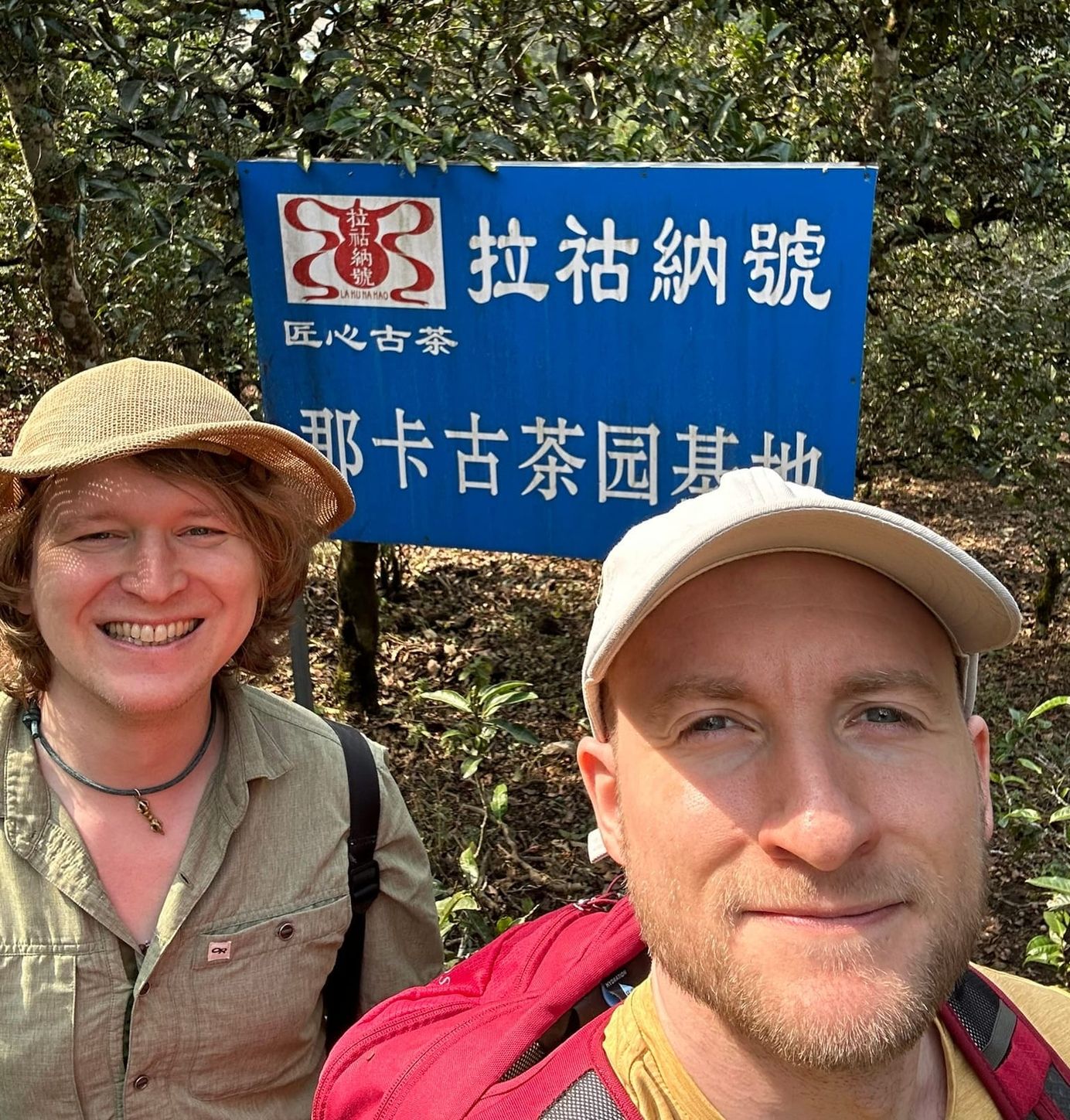
Research Trip 2026: Menghai (勐海) - Post Trip Editorial Conversation

The episode is also available on YouTube and Spotify.
A full transcript is included on the episode page and below:
[00:00:05] Jason Cohen: Hello everyone. I'm Jason Cohen, the author of an Introduction to the Art and Science of Chinese Tea Ceremony. Today we have a special bonus episode of Follow Up to our 2026 Tea Technique Research Trip to Menghai. Here with me for today's podcast is senior editor Pat Penny.
[00:00:23] Pat Penny: Hey, hey.
[00:00:24] Jason Cohen: It was the two of us and a bunch of local friends this year in Menghai. Menghai is another puer area. It's part of Xishuangbanna. It's probably one of the more common of the two Banna tea areas, Menghai and Yiwu. And so this was our second year in a row in Yunnan, our second year in a row focusing on sheng puer. Although we did quite a bit of shou puer research this trip. And this is all in support of the eventual third book on puer tea.
Pat, how was the trip?
[00:00:56] Pat Penny: When I'm telling people after I came back home, like, what did you do on your trip? Inevitably over the last four years, the answer was like, I drink a lot of tea. This year, I think the second thing I said to people was, I ate donkey. I think that's the second thing that came up. I don't know if it sums up the trip in any way, shape, or form, but, it was awesome, man. It's always an experience. It's always really hard to kind of encapsulate for people like what we were doing for a week. It's like, yeah, I went to this one person's house. I drank tea. We walked up a mountain, we saw tea there. We drove to another place, drank tea with another guy. It doesn't, when you break it down into the moments, it doesn't really capture everything that we really did.
But I feel like we were really able to one, just get a really good sense of some of the environments of these well-known tea mountains. And really helped actually having the frame of reference of Yiwu, Greater Yiwu area. Just to, to pull comparisons, I think last year when we were in Yiwu, I obviously had other tea regions as a comparison but didn't have anything else really within Yunnan or within puer producing areas to compare to.
And now having Yiwu as the backdrop and looking at all these new to us mountain regions it was much easier to pick apart what's unique about this environment. And then we got to spend a lot of time with processors. We were a little less focused on seeing tea processing this time, although we did see some differences compared to what we had seen in Yiwu last year.
But then we spent a lot of time kind of going back and forth to factories, seeing a little bit more of shou production and a wider variety and ideology of shou production than I thought we would be able to get exposed to in just one week's time. Yeah, I mean, it was, it was a relatively short trip actually, as far as you and I's tea trips go. But yeah. Damn, we did a lot. It was, it was a big one.
[00:02:37] Jason Cohen: A short trip for you.
[00:02:38] Pat Penny: That's true. Yeah. You continued on.
[00:02:41] Jason Cohen: Pat was in China for about 10 days. I was in China for about a full month, for about a week before Pat got there and then another two weeks after Pat left.
[00:02:50] Pat Penny: I mean, you literally landed, not to date this conversation, but you landed like two days ago, right?
[00:02:55] Jason Cohen: I did. I'm 48 hours off this, off this trip.
[00:02:59] Pat Penny: Yeah. I've been back for like two weeks, so yeah.
[00:03:01] Jason Cohen: Yeah. Straight from the Longjing fields.
[00:03:04] Pat Penny: And that's what I'm drinking this morning, so it's perfect.
It's like you brought it back for me.
[00:03:08] Jason Cohen: I know. I wish.
[00:03:09] Pat Penny: I wish too.
[00:03:11] Jason Cohen: So Pat's not drinking my fresh Longjing, and I'm not drinking my fresh Longjing. I am, of course, like every year drinking Dancong.
[00:03:18] Pat Penny: So coming outta this trip. What, what, Dancong bro. Yiwu, bro. Menghai bro. Where, where do you land?
[00:03:24] Jason Cohen: Ooh.
[00:03:24] Pat Penny: The question everybody wants to know.
[00:03:27] Jason Cohen: The question everyone wants to know. I'm certainly still a Dancong bro.
But I will say that my Dancong consumption has been ever so slightly tempered with Wuyi, with yancha. Mostly because since establishing that new relationship and since going back to Wuyi multiple times, my relationships there have really deepened, my access there has really deepened, and my wallet has suffered
[00:03:51] Pat Penny: tremendously.
[00:03:53] Jason Cohen: Tremendously. Tremendously. Yeah. Yeah, I don't know if I'm ever gonna get used to paying like three, four, or $5 a gram.
[00:04:00] Pat Penny: It's for the top tier of things. But, when we were in Yiwu last year, what three or four or $5 a gram would buy you? I don't even know because we found teas for one to $2 a gram that were top tier. So it's a hard shift to make.
You were messaging me, asking me if I want to buy some teas, and I did the math on it quickly, and I was like, bro, that's not a lot of tea for a lot of money. Coming, coming out of Menghai and Yiwu as the last two trips, the price for good access is very, very different.
[00:04:29] Jason Cohen: Yeah. Although, I mean, we paid some price for access. We, we did go to some of the famous villages this trip, and we did see some tea. We tasted some tea that, I think what they said was going for 6,000 rmb per fresh kilo. So that would probably be like 10 to 12,000 rmb per processed kilo.
[00:04:50] Pat Penny: It'd be, it'd be about five x per processed kilo.
[00:04:53] Jason Cohen: That would be even more. Wow.
[00:04:54] Pat Penny: Yeah. Like 30 K, renminbi.
Yeah. I mean, this is a village that everyone knows has a price tag attached to it. And you know that tea was good. Was it 30 K, rmb per kilo good? No but it was great.
[00:05:06] Jason Cohen: Don't you have friends you need to show off to Pat? Don't you have like some banquet dinners you need a host?
[00:05:09] Pat Penny: I don't have any state dinners, any government officials that I need to like really build guanxi with. So, no, no need for that tea for me.
[00:05:18] Jason Cohen: Don't you need a numbered tree with your,
[00:05:20] Pat Penny: I don't even know what 30 K, rmb is in USD. Let me just do a quick, yeah, that's too much money for me. I just did the math. It's, it's north of $4,000 which, when you break that down still is only $4 a gram. So it's just matching the high end of Wuyi. So once, once again going from puer to Yancha, the price shock is real.
[00:05:43] Jason Cohen: The price shock is real. The price shock is real. So, no, I'm, I'm definitely still a Dancong bro. So I think, I think maybe the thing to say is Menghai, I find, in this trip, you were talking about the the environment and what we got to do this trip. And I would say that in Yiwu we did a lot of processing. We did a lot of tea processing. We really got deeply into variations in, in processing methodologies and the results and, and what it means for the resulting tea and tea quality. But we were basically dealing almost exclusively with high-end gushu tea, one or two qiaomu thrown in there. But I mean, we were, we were pretty much on the real gushu bandwagon in Yiwu.
And then here in Menghai, I feel like our focus, and, and our focus, we go into these trips, we know what we want to research, but everything is based on what access we have, who we're working with, what they're willing to do, and show us, the time period that we're there. There's, there's a lot of factors that go into what we actually wind up researching. And sometimes we stumble into research questions that we didn't really know were going to have such depth and such interest. And I felt that to an extent that's what we did this time where my big takeaway from the trip was really forest management.
My big takeaway was the difference and the diversity in environment, both because of the terroir and because of human intervention. And I would say that to an extent that we didn't see in Yiwu. I would say that Menghai has a greater range of environmental diversity on both, both aspects.
[00:07:22] Pat Penny: It definitely takes its place, I think, at both ends of the extremes. You've got everything in between. But we certainly saw none of the same level of deep forest that we saw on Yiwu. And we saw, yeah, a level of intensive garden management that we also never saw in Yiwu. I feel like Yiwu was maybe more like moderate in most levels of approach. People kind of were like, all right, that's the tea. It's deep in the forest. We're gonna let it do its thing. You take care of it, you gotta gotta do some pruning here now and then.
But we saw full blown, like weed whackers running, blowing out fumes in the gardens. In Lao Ban Zhang (老班章) we saw people put piles and piles and piles of, of cuttings and prunings which makes sense time of year. People were getting rid of dead branches. But just on the level that we never saw in in Yiwu.
I will also say for me the bigger takeaway in addition to the garden management was just the scale. When we were in Yiwu last year, I was like, wow, there's a lot of tea in these forests. Really deep in there after we've walked for 30 minutes. There was more accessible tea as well. Not a ton of it, but.
When we were driving into any mountain range in Menghai. As you start going up the mountain, it's like, holy crap, there's tons of plantation tea all over the side of this mountain. And we just drive deeper and deeper. And there's just more and more and more plantation tea. And I mean, like Bulang (布朗) for example, we're driving for about five hours across this mountain range, hitting various villages, but the total drive time, probably somewhere between three and five hours. And it's nonstop tea the entire way. I mean, I feel like just on Bulong alone, we saw more tea than we ever saw across all of the different villages we went to in Yiwu. It was so much tea.
[00:09:04] Jason Cohen: More plants, more density, higher cultivation rates, a lot more intervention, so each tree producing more leaf.
Yeah. And I would say the surprising thing about that, the thing that I would say is most shocking about that is we did try some of the what some people would call sheng tai gushu (生态古树) taidi cha (台地茶) like literal plantation tea grown organically with bushes that are heavily trimmed, that look small and bushy, cutting ceiling but that are over a hundred years old.
[00:09:36] Pat Penny: That was a cool surprise actually.
[00:09:38] Jason Cohen: That was a cool surprise. And we tasted that tea and it was, I mean, was it mind blowing?
Were we, like, we're gonna buy kilos of this? No
[00:09:45] Pat Penny: Taidi cha bros. All the way, only taidi cha from here on out.
[00:09:49] Jason Cohen: No, but I mean, it was good tea. It was totally acceptably good tea. It was, it wasn't great tea. It wasn't tea that I'm gonna go suggest everyone go, go run to, to enjoy. But like, it felt fine to drink. It tasted fine and I think that that's part of my takeaway from this trip is that it's easy to seek perfections, easy to critique the density and the forest practices and all that. But at the end of the day, most of the tea that we were having, even if it wasn't the best tea ever, even if it wasn't our favorite tea, there was very little of it that it was full on rejection. Like, nope, this is bad, this isn't good.
[00:10:31] Pat Penny: There might have only been one or two teas that we had a few brews and we were like, nah, we're done. Even, even, yes, a lot of things went over the, the plate as just like average. But I, I think there's only one or two teas the whole trip that we're, like, oh, I don't want to drink this. Yeah, no, thank you. Which is, is still a pretty good average compared to a lot of our other trips. Yiwu not withstanding, the rest, well Wuyi was the bad one . But Yiwu may have been the only place we didn't have any bad tea. But that once again goes back to who we were with.
[00:11:02] Jason Cohen: Yep.
[00:11:03] Pat Penny: Yeah. I think this goes to a question that we chatted a little bit about during our pre-trip recording, which was the advice to beginners and just buy factory tea cakes. We saw a lot of factory tea material on this trip. We hung out with some factory tea sourcers. The taidi gushu sheng tai* that you're referring to is a large factory's plantation tea. I feel a lot more comfortable recommending plantation in factory tea to people now.
*Note: Our local contacts described this plantation is "gushu shengtai taidicha", but they were using the term gushu colloquially for dashu/xiaoshu, not in the forest tea sense of the term. In any case, we should have been a little more hesitant to repeat the claim. During our standard fact checking process, we found that these trees are all approximately 38 years old, dating from the plantations founding in 1988. That's old for plantation tea, which is usually ripped up every ~15 - 20 years (and many contemporary eco-gardens in other tea regions call >30+ year tea bushes "laocong" which is an abuse of term the editors and I avoid), but it's not old enough to merit the distinction of "gushu". That doesn't change our reassessment of the tea from this plantation, but it does deserve a clarification to our readers.
[00:11:31] Jason Cohen: Same.
[00:11:32] Pat Penny: We, we had, we went to the headquarters of a large factory, had tea at the cafe. Everything that we kind of had related to this brand was all like totally good. Yeah,
[00:11:42] Jason Cohen: Totally good. Yeah. You go into a random third wave coffee shop and you order a good coffee and you're like, I'm totally satisfied with this coffee. It's more like that than like showing up at a famous coffee farm and saying, give me this year's prized micro lot.
There's certainly a difference here and we, we judge those teas a little bit differently sitting in the factory cafe and getting to to drink with some of the factory people. I guess to our point, to your point, to my point is like, it's not bad. We're not saying to people, don't drink this.
[00:12:12] Pat Penny: I think just based on the kind of access we have and what we do, I'm going to continue not seeking out factory material because it doesn't make sense with my preferences and honestly, from an economic standpoint anymore either. Factory tea is just exorbitantly pricey for old tea. But even fresh tea, the prices are also marked up pretty interestingly because of some of the, the franchising and buying stipulations. But yeah, I mean, we went last year to a Dayi shop when we were in Kunming, and we had said, I think on our recap that we, we bought some 75 42 who's totally enjoyable. I feel yeah, very positively about factory tea coming out of this trip. But it's not gonna really make its way into my purchasing habits.
[00:12:54] Jason Cohen: No. But I also feel much more comfortable drinking it, knowing that they've really, when they say that they converted to more organic practices that they mean it.
[00:13:02] Pat Penny: Yeah. No, I mean, the plantation that you and I had seen which was called Yiwan Mu, is like 10,000 acres or 10,000 Mu. This is on Bulang. It was just, like as far as you could see little taidi, gushu taidi everywhere.
[00:13:17] Jason Cohen: Gushu taidi.
[00:13:18] Pat Penny: The environment was clean. We were seeing bugs, hearing birds. It was more than just picturesque, right? Like, it actually, it felt healthy. The air was clean. So, yeah, I, I feel really positive about factory tea after this trip. But,
[00:13:30] Jason Cohen: Switching gears there 'cause I think that we, we got a little off the rails. The point that I was making earlier was that compared to Yiwu, the terroir diversity, not just the forest management diversity, but the terroir diversity was so much more varied in Menghai. I think the thing that really surprised me is we went to one famous village and it was like being in a jungle, right? It was wet, it was moist, it was lush. There was literal almost like a, like a, a Wuyi jian with a flowing river and moving water, literally tea growing next to banana trees, which I don't think I've seen before.
And then the next day we go to a different village, which is at over 2,200 meters. And it is alpine. It's cold. The tea is growing next to pine trees. And the idea that both of these are Menghai, the idea that both of these are part of one, one region, so to speak. They're as much of a region. Yeah. They're both Menghai sure. But this is as distant or as much of a difference in, in region and terroir as say like, Mahei (麻黑) from Yibang (倚邦) may, maybe even a little closer than that even.
[00:14:40] Pat Penny: I would say even more different than those two personally.
[00:14:43] Jason Cohen: Yeah. More different. More different. Certainly more different. Yeah. But like as distance and as what constitutes a region, these aren't on the same mountain despite being both Menghai tea. But I, I think that was a real surprise ' cause everyone tries to map certain flavors or certain attributes to the different tea regions.
They say Menghai is strong and aggressive and it's the king of tea, and Yiwu is softer and more delicate and it's the queen of tea. And like, yeah, but there's Catherine the Great and there's Queen Victoria. And like, there's some real differences here.
[00:15:16] Pat Penny: Yeah. This year since we had the experience of Yiwu, I didn't come into this trip thinking like, yeah, I know what all these regions in Menghai tastes like because I found that was disproved for me in terms of Yiwu. So I came in a little humbler, but I think what I came out of the trip with was my previous preconceived notions of Menghai area tea were really all formed around Bulang.
So I had an idea that, all right, Menghai tea is this, but really it was Bulang area tea is this and many things to the east and the north and you don't get much further south than Bulang, but really the east and the north of the Menghai area really ran counter to my initial impression of what Menghai area tea could be. As particularly some of the farmers that we had visited and, and their tea, which is higher end.
We even went to some areas that I think we, we talked about in our pre-trip recording. So like Pasha (帕沙) was an example. That was an area that we were like, is Pasha even like Menghai? Like, we weren't sure. We were talking about it. And it's one of those areas that we said we weren't really like super hot on. But then, we went to Xin Niu Tang, the kind of famous garden on the top of Pasha. And while there's probably some meh tea from that area, I believe there's also fabulous tea there and it does not conform to my preconceived notion of what Pasha was or to what my preconceived thought of Menghai tea in general.
So, yeah, I think the diversity that we saw and the diversity that we tasted was much broader than what I had expected and I think is much broader than what other people believe as well.
[00:16:45] Jason Cohen: I, I think we need to be, intellectually honest and say to listeners that in our pre-trip recording our hot or not assessment. I would just give us like a 0%. I would just say we were wrong. Wrong everything except Xin Ban Zhang (新班章) .
[00:17:01] Pat Penny: Yeah. Very true. Yes. Xin Ban Zhang. Not hot. Yeah.
We had no idea before, I think, landing in Menghai. And after, we really did some legwork. We got out to basically all the famous, well-known mountains.
[00:17:14] Jason Cohen: And a bunch of the less known! We went to some mountains I had never heard of.
[00:17:17] Pat Penny: Very true. And, the teas were, I think we got surprised everywhere in, whether for good or for bad, we were often surprised. Things were encountered to our preconceived notions.
[00:17:27] Jason Cohen: Yeah. Yeah. I, I would say so. And we, we found some, we found some good teas. I think to me, Menghai is interesting in that because of the way that it has developed and because of who is involved in the tea. I think that and hopefully no one takes any great offense in me saying this, but I feel like Yiwu is more Han and Menghai is much less Han in the tea world. And because of that, there's a little bit less of this literati scholar tradition.
One of the things that, that I think that we found in Yiwu is that people really hold on to past teas as library teas and say, we can go back and we could taste what a tea from this region from this year was like. And we can compare this to our new tea and have a memory and know whether the tea is of the same standard, if it's gonna age in the same way.
And we did not find that in Menghai. Menghai was like, farmers are going to move their tea. Like at the end of the season, if they have anything left, it will be discounted and it will be sold.
[00:18:36] Pat Penny: We were traveling with a, a sourcer who's really well regarded by a lot of these farmers. And even then it was hard for the farmers to find anything that they felt like confident sharing with us because they just don't have any tea left on hand. It's right before the harvest. They might still have a little bit of a select pick here from last year or a little bit of a gushu pick there. They're business people and they're really trying to move their stock. It's a very different vibe than what we ran into in Yiwu for sure.
[00:19:05] Jason Cohen: So it is a very different vibe. And the other thing, because of that and I think that this plays deeply into it, I think that it's much more, we were asking people what their normal practices. When you do select trees, do you normally do tiancha (甜茶) and kucha (苦茶) together. When you do pure gushu trees, do you mix across these different, you have gardens on both sides of a ridge, do you mix those? And basically the answer across the board from every farmer, even the farmers who had great tea that you and I actually made some small purchases from, they were like, oh, we do whatever the lao ban wants. Like lao ban asks and they can have. We make to order.
[00:19:42] Pat Penny: Yeah. If you're paying, we've got it. Yeah. I mean, I think left to their own devices, they would just be having the garden picked and processed together.
[00:19:49] Jason Cohen: Yeah.
[00:19:49] Pat Penny: It's a very different style. And it really is, I think, very economically driven as far as what teas get made in Menghai today. Was that always the case? I don't know. But it's definitely, whoever's the buyer is making the decisions. I don't think Yiwu is always different. I think we were often traveling with basically lao ban, right?
[00:20:11] Jason Cohen: Our contacts were a mix of farmers and tea maker, farmers who are also tea makers. I think there's a difference when you have your own label, right? I don't think any of the farmers that, I, I think only one farmer that we were with in Menghai had their own label. Their own house.
[00:20:31] Pat Penny: Yeah, that's true. Often many of the makers seem sold into a village cooperative, or they sold directly to somebody who has been buying their tea for a few years or many years. The business practices of Menghai and Yiwu seem very different, but the way that that shows up as far as the scholarship and appreciation of tea were definitely very different.
[00:20:51] Jason Cohen: There was, there was a few people, I mean, we have one, we have one very good, I would call her negociant, whose sister is in ultra tier gushu garden. But who sources from her sister's garden and also sources around from others. Like, she obviously had some real tea scholarship going, like we sat down and the first thing she handed us was a four tree gushu blend ultra
[00:21:16] Pat Penny: casual, casual, ultra select pick of Lao Ban Zhang. Yeah. Yeah, no, she got street cred real fast.
[00:21:23] Jason Cohen: Yep.
[00:21:23] Pat Penny: I don't know that we emphasize this enough. Everybody who hosts us is like extremely gracious with their time beyond sharing amazing tea with us. Like she went so out of her way to make sure that we got to experience what we were hoping to try and experience. The level of hospitality we receive in China is always next level. But she definitely went out of her way to really make sure that we got the experience that we wanted. And, is a, is a contact that I think we'll continue to reach out to when it comes to learning about Menghai.
[00:21:51] Jason Cohen: Absolutely. And you know what's true scholarship. And we say, can we buy this? And she says, no, this is for my personal consumption.
[00:21:56] Pat Penny: Yeah. I have just this bag. This is mine.
[00:21:58] Jason Cohen: Just this bag. This is mine. You cannot,
[00:22:00] Pat Penny: Sorry. No,
[00:22:01] Jason Cohen: you can't take this from me.
[00:22:03] Pat Penny: Please, please no.
[00:22:05] Jason Cohen: Dead fingers.
[00:22:06] Pat Penny: You can literally have anything else for free. She was just gonna give us tea. We were like, Ooh everything else was good. Nothing else was that four tree blend.
[00:22:15] Jason Cohen: So turning to that other point, forest management, this is something that came roaring into my consciousness in a way that maybe I was unprepared for. And, like any good little scholar boy, I've read James C. Scott's Seeing Like A State. I'm totally up on the hip books. In my defense and for posterity, I read that book before it was cool.
[00:22:41] Pat Penny: Before it got recommended across every manosphere podcast?
[00:22:45] Jason Cohen: Yeah. Before it got recommended across every manosphere podcast.
Can you imagine getting that book recommended to you by Rogan? It's not my jam. I may have studied some related things in college. But you know, one of his chapters in that book is on high modernist forest management, and that chapter was so pertinent to what was going on in, in Menghai because the thing that really struck me, you know, gardens in Yiwu are basically unmanaged in comparison. Pat, you had just mentioned that we saw weed whackers. We saw them literally lawn mowing the forest between the gushu trees.
[00:23:22] Pat Penny: Yeah, I got a good video actually, and I planned to show this on Instagram, but it's like, as we're walking down into this famous, well-known touristy garden area, because it's got some of the most expensive trees in Lao Ban Zhang, the most expensive. You just start to hear this buzz, this drone, and you're getting closer and closer, and the drone is just getting louder and louder, and suddenly you hear no bugs. You hear no birds. All you hear is weed whackers. And you're like, where are these things? And you look, and they're literally just like toppling the ground in between all of the trees. I mean, not a blade of grass left behind.
[00:23:56] Jason Cohen: Is that good? Is that bad? It's so easy to have this knee jerk reaction to say, well this is, this is bad. You shouldn't be using weed whackers and lawn mowing the forest between the gushu trees. To an extent, I believe that. To an extent, I think that lower intervention is better. But can I say that that tea is bad? Well, I don't think it's worth its astronomical price. It's very much a, a tourist name brand bragging garden. But is it bad? I don't think so.
[00:24:29] Pat Penny: I mean, it's still a hundred plus year gushu tea from an extremely well-known area, famous area, that is famous for a reason, because the good tea from that area is great. Are the fumes that the weed whackers are putting off more or less harmful than the different weeds that might grow around the tree and take some of the nutrients in the soil? It's, it's actually is a hard argument to definitively know.
[00:24:57] Jason Cohen: In a way it's a hard argument to definitively know, but would those weeds really be a problem if they were allowed to grow naturally? Certainly there's a cycle of, of plant growth and weed growth. So the weeds are gonna grow, they're gonna deplete some things. Some of the weeds are gonna die. Hardier trees or hardier plants are gonna take their place in between the gushu. And it's not like we saw in Yiwu that trees were dying because there's too many weeds around, 'cause the dandelions were next door, right?
[00:25:23] Pat Penny: The dandelions with their notoriously deep roots that are going as far down as the a hundred plus year old tea tree roots. Yeah.
[00:25:30] Jason Cohen: Yeah. So I, I, I have, I have difficulty accepting that the trade off is worth the marginal increasing yield. What? By weed whacking, they get an extra, I don't know what it is, 5%, 10% yields, because there's nothing competing with the tea?
[00:25:43] Pat Penny: Probably not even that, but what we saw was it was weed whacked and then it was tilled. So it's not like it was just one or the other. It was, it was all forms of garden management.
[00:25:53] Jason Cohen: Yeah. So not every garden was tilled. So we could talk about levels of intervention, which is part of this idea that I want to talk about and one of the things I, I hope to do some writing about. But this level of intervention, garden management, you had some wild areas. So I wanna be clear that in Menghai, we did see some truly wild areas with great tea. And the alpine gardens, the higher elevation alpine gardens, things above 2000 meters were, by nature, were less weeded. Those plants don't grow consistently at that, at that altitude. So the, the gushu gardens were a bit more sparse in other plant life, next to the pine trees and stuff.
But in these lower altitude areas, we saw a large range. We saw everything from pretty natural, untended to simply weeded to fully untilled to tilled and fertilized to tilled, fertilized and brought in industrial, like in growth soil. And there was a range there. And, we didn't, we, thankfully, the farmers that we were working with for the most part only went as far as tilling. And even then we didn't buy a whole lot of anything from any tilled fields, but it wasn't like we were able to avoid weeded fields.
[00:27:10] Pat Penny: No, we, we didn't exactly have the select pick of like, hey, yeah, not those trees right there. But we were able to kinda say from a general level of garden to garden, what garden we were looking for. And once again, lao ban gets what lao ban wants. So, we pick to order.
[00:27:26] Jason Cohen: If we bought an entire garden's worth of tea, we would be able to say, okay, now for the next two years, no intervention.
[00:27:34] Pat Penny: Yeah, we don't, we don't have multi-year garden money, unfortunately. But if you like, comment and subscribe now, you can get in on the ground floor of leasing out a garden for the next X number of years.
[00:27:45] Jason Cohen: We joked about that with a couple people who are like, what would it cost to lease this garden for a number of years?
[00:27:51] Pat Penny: There's western vendors that do it.
We, we would not be doing it for sale purposes. We'd be doing it for research purposes, but there's people who do it.
[00:27:59] Jason Cohen: We're not there yet. Just a couple more hundred subscribers, and that's gonna be the next project for this book.
[00:28:05] Pat Penny: So by book number five, we'll have the money to lease out some gardens.
[00:28:09] Jason Cohen: Book number 5.
[00:28:10] Pat Penny: 20, 20 40.
[00:28:11] Jason Cohen: Puer Garden Management for Dummies.
[00:28:15] Pat Penny: You too can manage your own garden in Menghai or Mengla (勐腊) with this advice.
[00:28:21] Jason Cohen: Grow your first puer tree.
[00:28:24] Pat Penny: We can get an integrated app and everything.
Look at that.
[00:28:27] Jason Cohen: Yeah. Baby's first gushu. It'll be a hundred by the time you're a hundred.
[00:28:31] Pat Penny: Plant it now for maximum returns.
[00:28:35] Jason Cohen: So that's on the soil side. Did you have anything else on the soil side?
[00:28:38] Pat Penny: I mean, in general, just like really specific observations. We did see a couple different colors of earth in some of the areas we were going to. So Yiwu was a lot of red dirt. We did see some more black earth in some of the areas that we went to. So definitely some different soil, just like nutrient content that we're seeing. So that was interesting.
One area we went to that we did buy tea from was Na Ka (那卡) and some of the famous gardens in Na Ka have this black earth. How much is that contributing to the differences in flavor versus just the overall environment? So the altitude, the exposure 'cause it is a higher elevation garden. I don't know. But definitely the teas we were tasting in Na Ka did, as we were kind of alluding to before, taste different than, for example, Bulang area tea or Nannuo (南糯) tea or anything like that.
[00:29:26] Jason Cohen: Yeah, it tasted quite a bit different than our conception of, of Menghai tea. There was some of the red earth, but we saw a lot more yellow and black earth. Actually, in Yiwu, you hear a lot of marketing about red earth, but we didn't see any soil marketing in Menghai.
[00:29:42] Pat Penny: Not at all. No, not at all. And every time we pointed out soil, everyone was like, yep. Like, no major reaction.
[00:29:48] Jason Cohen: Yeah.
[00:29:49] Pat Penny: So we we're much more focused on soil than I think most people laowai who rock up are.
[00:29:55] Jason Cohen: So we've talked about the soil management. Now I wanna talk about the tree management. Do you have a, a, a premeditated harangue for our listeners about the tree management?
[00:30:05] Pat Penny: I just don't know that I had any preconceived notions on tree management for Menghai. And then we got there and it was like, oh my God, they're doing a lot with these trees. We've all read Zhang Jinghong's book, right? So you've, you've read sections in that book on practices in the early two thousands on decrowning and pollarding. And when you and I were in Yiwu last year, we saw some trees that I erroneously called pollarded. And this year I have a much clearer idea of what pollarding looks like because we saw it all around Menghai.
[00:30:36] Jason Cohen: And to an extreme level.
[00:30:38] Pat Penny: Yeah.
[00:30:39] Jason Cohen: Zhang Jinghong was writing about the, the late nineties, in the early two thousands, but some of those pollards look like they go way further back.
[00:30:50] Pat Penny: Yeah. I mean, we saw some trees that I'm like, this is, this has to take decades to get the tree to look like this.
[00:30:55] Jason Cohen: 50, 60, 70-year-old plus pollards, like easily. That could have been done in the seventies or the eighties.
[00:31:02] Pat Penny: Yeah, generally speaking about the trees as well, I mean just the thickness of these trunks, right? These, these are different. Obviously this is a different variety than what we're seeing in a lot of the areas around Yiwu. We're seeing really thick trees. They're, in many cases you can actually tell that they're planted near each other versus Yiwu, where you kind of see natural outgrowth from a, a larger central tree.
[00:31:26] Jason Cohen: You see the ring of younger trees around the largest, oldest tree.
[00:31:30] Pat Penny: Yeah. Whereas here it's kind of like, all right, there's a lot of very similar age trees altogether.
[00:31:35] Jason Cohen: 50 trees all the same age
[00:31:38] Pat Penny: Because they were planted at the same time. But the density, the overlap of these trees is huge. Branches are just on top of branches from other trees. And just like the overall yield was something I was not ready for after coming from Yiwu last year. These trees are just easier to pick because everything is set up to be pickable. It's almost like having a plucking table on a tree which was wild. But yeah, a picker could spend a good hour or two on one tree in Menghai and the amount of tea they would have versus doing the same thing in Yiwu. I mean, it would be astronomical. It's gotta be like four to six x. Just as far as specific tree yield goes.
[00:32:17] Jason Cohen: Yeah, the things that were shocking. I mean, one is the extent of the pollarding and how old the pollarding were. How much decrowning they were doing on gushu trees. Like these are, these trees could be making farmers, as we said in, in the thousands to tens of thousands of rmb and they're there with like a hacksaw and they're like, all right, here goes the crown.
Maybe it's like grown up. Yeah. I think maybe it's different when you've grown up around these trees and you're like, ah, probably not gonna kill it. But like, I don't know if I had a 200 plus year old tree in my possession, like I am not taking a buzz saw. You do it?
[00:32:53] Pat Penny: No. Not worth it.
[00:32:54] Jason Cohen: And I mean, some of these trees were so cut back, were so cut back to just the trunk, that they were literally growing leaves from the trunk, which is something that we hear that the tea can do when it's super stressed and you don't pick it that year 'cause that tea supposedly tastes awful.
But you know, this, this extreme level of cutting back, deadwood, whatever, fine, but like, not just cutting back deadwood, but cutting back live branches and shaping live branches and making the tree pickable and putting up the, the scaffolding, the metal scaffolding around these dense groves of, of gushu.
Yeah, it's something that, when, when people talk about ancient arbor and you walk into a forest that has, 200 year old, like 50, 60, a hundred, 200 year old trees with some scaffolding around, you're like, this is an arbor, this is like a fruit orchard for tea.
[00:33:46] Pat Penny: Yeah. This is a commodity. Like this has been commoditized to a degree. I felt that Yiwu was, people were managing and tending a forest.
[00:33:56] Jason Cohen: Yeah.
[00:33:56] Pat Penny: Menghai, people had bonsai trees in the forest and they were tending those bonsai trees in the forest.
[00:34:02] Jason Cohen: Yeah. Little bonsai, puer gushu. We talk about this and, and again, I, I, I want to be at least somewhat clear that there's an inclination, particularly amongst western tea drinkers to believe that lower intervention is better. To believe that as wild as you can get, as untended, as unknown, as remote as you can get is gonna be the best tea. For reasons of, that we talk about in book one, of authenticity and commoditization, what does it mean to be real and what does it mean to be good? But despite all this, you know, we go walk into an area like Pasha where there's some real forest management and we could actually see the lines in the earth that separate the family gardens, what families have rights to what gardens and how they do different soil management.
And one field in a very old garden, excellent tea, that, that is actually some of the tea that we were drinking was literally right next to a field of similarly aged trees, but that was all tilled. And I wish we had had the chance to try those side by side 'cause that would've been an amazing experiment. But that tea that we had was still excellent tea, right? That was some of the best tea that we found. And it's so easy to have these knee-jerk reaction to say, Yiwu was more wild and Yiwu is thus better. And I don't think that's the takeaway. I think the takeaway is that, I, I said this in my talk. I, I gave a talk at Tsinghua University about the puer tea. And I said, look, no one walks into a fruit stand or goes to buy fruit and says, ugh, this fruit was grown in an orchard.
Like, maybe we've had that experience.
[00:35:51] Pat Penny: Wild fruit only.
[00:35:53] Jason Cohen: Yeah. Wild fruit Only. Maybe you've had that experience of eating a wild huckleberry or wild raspberry. And sometimes they're great, but it's not like you're saying no to orchard grown fruit. And so should tea be any different and I don't have a great answer to that right now, except to clarify that, that my takeaway is not orchard bad. My takeaway is that there's a different level of agricultural intensity and intervention, and these farmers are doing it for a reason, and some of that reason is monetary and some of that reason is yield. But some of that reason is because these are practices that have been ongoing for quite some time that they believe is necessary for the continuation of viable gushu processing.
[00:36:40] Pat Penny: Yeah, I mean, I think if we look at parallel industries as well, it's not like we look at high end wine, and we go, oh, well, this was grown on an estate. Can't be good. I, I prefer when, people find wild forged grapes and make 3000 bottle runs out of them.
[00:36:57] Jason Cohen: 3000 bottles, Pat? The bottle I had last night was a 500 bottle run.
[00:37:01] Pat Penny: Oh, well, and wild forged. Not a estate grown.
[00:37:04] Jason Cohen: This grapes on.
[00:37:05] Pat Penny: Oh, okay. You're halfway there. You're halfway there.
But it's just, tea, I think we often like to make it seem more exotic and more wild than it it necessarily is. And yes, those teas do exist. And, they're not always good because of those things, right? Because it's wild or because it's from a far out region does not make it good. And the opposite is true, just because it's not, does not have those attributes, does not make it bad.
[00:37:31] Jason Cohen: On that note, I think the last thing about, about puer and our portion of the trip together is yesheng (野生). In Yiwu there was a real dividing line and you could taste it between yesheng and quote unquote cultivated tea. And we didn't come across any yesheng in Menghai.
[00:37:49] Pat Penny: Not at all. We had teas that were from the Guoyoulin (国有林) of certain areas. State protected forest areas within Menghai. And even those Guoyoulin teas of those areas were not, there's not a lot of wild tea that we were tasting. I think it goes back to the cultivation we were just talking about. All the land in the Menghai area that can be cultivated under tea is very heavily cultivated.
[00:38:12] Jason Cohen: Yeah. It didn't even come up once in conversation. I think that's one of the things that we go back and we start asking people, do you have any yesheng? Is there anyone making yesheng? Is there anyone with yesheng trees? And to taste it, and to see if that tastes the same as what we think of as the yesheng flavor from Yiwu. Or if we could find any similarities in it.
[00:38:31] Pat Penny: When I think about it more and more, I don't feel like I've ever seen, even on the vendor side, people selling yesheng from Menghai area. I do feel like we see it a lot in northern tea areas, and we see it a lot in Yiwu, broader Yiwu. But I don't feel like I've ever seen like a, a Bulang yesheng tea.
[00:38:48] Jason Cohen: Maybe when we get our Menghai samples of kucha.
[00:38:53] Pat Penny: Well, so they did have different levels of ku, right? We are looking for still a tasty and enjoyable level of ku. But they did have like, se ku, they had deadly bitter. So it's possible that's a wild variety and it's just so bitter that they don't, they don't drink it. Yeah. No one drinks it.
[00:39:09] Jason Cohen: We'll get a sample. We'll see what that tastes like. We'll see if we're even able to taste it over the pure frontal bitterness.
[00:39:15] Pat Penny: Yeah, I think it's not gonna taste like anything but chewing aspirin and (bitter melon) kugua.
[00:39:19] Jason Cohen: Well, luckily I like kugua and I need an aspirin.
[00:39:24] Pat Penny: Perfect timing. I think that that mostly covers what we saw in Menghai. Maybe we cover just some of what we saw for shou puer separately unless we can talk about it now,
[00:39:34] Jason Cohen: We could talk about shou puer. We could also talk a little bit about Dai food and Dai BBQ.
[00:39:38] Pat Penny: Well, food in general pretty awesome on this trip. We had a lot of good food experiences. Not enough wild rice. We had good rice, but we only had the purple rice one or two times. But the bitter, the bitter bamboo, that's one that sticks out for me.
[00:39:52] Jason Cohen: Bitter bamboo was very bitter. That may have been more bitter than kugua, but it was very good.
[00:39:58] Pat Penny: So delicious. But yeah, no, Dai food was great. We had no, no Kunming shaokao this time together, so that was, the one major letdown of the trip. But otherwise I really feel like we only had one or two meals that were just like meh. Almost everything was really, really good.
[00:40:13] Jason Cohen: Everything was really good. The Dai barbecue at times I enjoyed more than others, but I would say drinking self-made homemade baijiu is real risky business.
[00:40:26] Pat Penny: Out of plastic water bottles.
[00:40:27] Jason Cohen: Out of, yeah, plastic water bottle. if I was worried about my microplastic intake, well.
[00:40:34] Pat Penny: It's on another level right now.
[00:40:36] Jason Cohen: Here's some acid etching out the inside of its container.
[00:40:40] Pat Penny: Nanoplastics.
[00:40:41] Jason Cohen: I would say, so we had one homemade baijiu that was made from corn that tasted like drinking white dog whiskey. And both of us felt totally fine the next morning.
[00:40:50] Pat Penny: Yeah. And then we, after having barbecue had some beer and some baijiu and I don't think we knew exactly what the baijiu situation was. But it was not good. And we did not feel fine the next day.
[00:41:01] Jason Cohen: No, they called it laojiu and it was brown in color. And that should have been our warning. That,
[00:41:06] Pat Penny: I think they were calling it la jiu, I think it was spicy, spicy alcohol.
[00:41:10] Jason Cohen: Was that what they were calling it?
[00:41:11] Pat Penny: Or It could have been garbage. Could have been garbage alcohol. La jiu.
[00:41:15] Jason Cohen: Some, sometimes the dialects seeps into the Mandarin. So there was a couple of times where it could have been one character or another. But it was either spicy alcohol or old alcohol. In either case, it was brown. It was not made from rice. And we did not feel fine the next morning.
[00:41:32] Pat Penny: No, we did not. No, that was not good. We already talked about it, but donkey was the other interesting meat we ate, cow penis soup, a variety of
[00:41:41] Jason Cohen: Penis soup. You got your, which cow peanut soup?
[00:41:44] Pat Penny: It was in Guanzhu Liangzi. It was with the deer porridge. The little tiny deer porridge.
[00:41:49] Jason Cohen: I, I thought that soup, so what was it? It was, it was deer niubi porridge.
[00:41:56] Pat Penny: Yes.
[00:41:57] Jason Cohen: And it wasn't, I also, I assumed it was also deer penis. But you're saying it's cow penis.
[00:42:02] Pat Penny: Cow penis soup, and then
[00:42:03] Jason Cohen: cow penis soup.
[00:42:03] Pat Penny: Deer, and then deer vagina soup.
[00:42:05] Jason Cohen: Yeah, deer vagina congee.
[00:42:07] Pat Penny: Yes, congee.
[00:42:08] Jason Cohen: Congee. Yeah. Yeah. So we really got our, got around in Menghai.
[00:42:12] Pat Penny: Donkey, eating ass, cow penis, deer vagina, yeah. Yeah.
[00:42:17] Jason Cohen: Unfortunately you conjured this 'cause I sent you that article. You talked about the article on the last podcast. All of our listeners in China asked me about it. That was like the one question that I got. Thanks, Pat. And
[00:42:30] Pat Penny: About Dick Soup. Yeah.
[00:42:32] Jason Cohen: Yeah, dick soup. And then now here, and then, of course you conjured it and we had to eat it. And it was fine.
[00:42:38] Pat Penny: It was, it was fine. It was a little springy. It was not my favorite, but
[00:42:42] Jason Cohen: Texturally deficient, flavor was as expected.
[00:42:46] Pat Penny: Yeah. I, I will not be making it at home. I'll say that much.
[00:42:50] Jason Cohen: I will say also that you could make it in a different style. I think like Sichuan spicy. I think you'd be fine.
[00:42:56] Pat Penny: Everything is better spicy. Actually, my favorite meal of the trip was probably the last meal we had together. The Jingdong (京东) style cuisine.
[00:43:03] Jason Cohen: Yeah. that was great.
[00:43:04] Pat Penny: Not, not great before a flight, but my God, delicious. The spice, the flavoring. That, that was probably my favorite meal of the trip.
[00:43:11] Jason Cohen: I, I, I think I agree with that. So that was our food experience.
Shou puer, next time someone like talks about moldy tea, I don't think they've ever seen what moldy tea actually looks like.
[00:43:26] Pat Penny: So I've seen pictures and videos of shou puer production before. I don't think I was ready to see what actually active fermentation in a wet pile looks like. Because that fermentation is active. So we got to touch the piles. You touch the outside of the pile, your hand comes off black because it's covered in black mold aspergillus niger, and for various aspergillus species. So I'm saying this tea is covered in black molds and then you dig into the pile and you dig deeper and deeper and it gets hotter and hotter and you start to see white dust and yellowish dust coming off the pile. And when you pull out your hand, it's just like sand falling off your hand because of all the, what I presumed to be various yeast species and spores. So I mean this is, I don't know, like compost that you left for a few weeks longer than you thought. And you open the lid and you're like, holy shit. Like it's really active moldy yeasty fermentation.
[00:44:20] Jason Cohen: Yeah, the colonization is so much more extensive than what I had assumed in shou puer production. And the level of control that they have is surprising in a way, or the level of knowledge about how to control it, I guess I should say, is surprising.
But yeah there's a lot of weird stuff going on in shou puer right now. You, you have your traditional floor processing, you have like the raised beds, you have hanging baskets, but you also have a lot of individuals who are doing selective strain, like pitched yeast, pitched mold, starter colonizations, and you have a lot of really high-end material. I mean, we tasted some Lao Ban Zhang gushu shou puer?
[00:45:03] Pat Penny: That I believe is what they said it is too. Outside of that we had had some what was it? Laotian single tree?
[00:45:08] Jason Cohen: Yeah.
[00:45:09] Pat Penny: Gushu shou puer as well. All of those were actually really interesting experiences. Obviously the quality of the material going into the tea is important. But I think having a wider range of materials and a broader range of flavor character and flavor profile of that tea going in and then having a robust traditional fermentation is gonna be much more defining of the flavor of the finished product than like having a single tree gushu shou puer.
I was actually not impressed with really any of the single picks. And we've talked about this when we talked about danzhu last year. Not all single trees are good and for shou puer in particular, when you actually need a, a certain mass to have a good fermentation, the yield of single tree really gets in the way of developing the flavors you want of a shou puer.
[00:45:57] Jason Cohen: Well, I think there's selection bias in there too. I don't know what single tree you're choosing to use for your shou puer.
[00:46:03] Pat Penny: Well, just one of the 50 kilogram producing more northern style tea trees.
[00:46:07] Jason Cohen: But I mean, part of that is like the shou puer is in vogue right now and people are paying high prices for it. Like that cake, that Lao Ban Zhang gushu cake was like a, like 900, a thousand US dollars.
[00:46:21] Pat Penny: It's 2,200. You, you shared the math with me.
[00:46:24] Jason Cohen: Yeah. Oh, it was 2,200 US dollars. Like, I don't know if I'm gonna spend this on shou puer.
[00:46:28] Pat Penny: Well, and we tasted it and it was good, but it was not $2,200 good.
[00:46:36] Jason Cohen: Yeah. So, I mean, it's just its own thing.
[00:46:38] Pat Penny: Yeah.
[00:46:39] Jason Cohen: Yeah, so there's, there's some interesting stuff going on in shou puer. I, I don't think I'll ever be able to taste shou puer again and not think to myself aspergillis niger.
[00:46:46] Pat Penny: Yeah, no, we had a little too much in depth pitch microbe analysis and I'm just always gonna taste aspergillis niger now whenever I taste shou puer.
[00:46:55] Jason Cohen: Part of what that experience did is I think it made pretty clear that this book three on puer is actually just going to be sheng puer. That we're not even going to attempt to cover shou puer.
[00:47:06] Pat Penny: No. It's a world unto itself and it's not the one that intrigues me as much. I mean, it, it would definitely have to be a labor of love to put together a book on shou puer, I think.
[00:47:17] Jason Cohen: Yeah. It's kind of like diverged so much from what's going on in sheng world. And overlap certainly, but it's just not, I don't feel, I don't feel the drive right now to write what could easily be 500 or a thousand pages on shou puer.
[00:47:35] Pat Penny: Yeah. Well. And the level of more fermentation and microbial related analyses would probably be prohibitively expensive to do the level of book that we would want to do.
[00:47:47] Jason Cohen: Yeah. We'll save it for when suddenly we become elderly and stomach challenged in need of shou.
[00:47:55] Pat Penny: Although it was perfect that we basically had it every morning after like drinking too much bad baijiu. And so we spent most of the morning, like an hour of just drinking strong, hearty shou puer to heal us before getting out for the day.
[00:48:08] Jason Cohen: Shou puer directly off the fermentation drawing pile.
[00:48:13] Pat Penny: We were just making sure our gut microbe was back in working order after damaging it overnight.
[00:48:18] Jason Cohen: The baijiu killed it off and then we recolonized it with shou puer?
[00:48:21] Pat Penny: Yeah, well let's just say, you know, it, it helped, it helped us move along for the day.
[00:48:26] Jason Cohen: Yes, it did. It was necessary recovery. That and the donkey.
[00:48:30] Pat Penny: That and the donkey. I could have skipped the donkey. Yeah, I don't, I don't think there's much more to share on shou puer. We'll, we'll probably share whatever photos we're allowed to share and that'll be about that.
[00:48:39] Jason Cohen: My portion of the trip?
[00:48:41] Pat Penny: Yeah. Let me know what cool stuff you did after I left.
[00:48:46] Jason Cohen: After you left I gave a talk at Tsinghua University on puer.
[00:48:50] Pat Penny: They loved you.
[00:48:51] Jason Cohen: They did. It was an interesting talk. It was about gushu tea and forest management. And it was like 88 slides of photos of tea trees. And of course then I get there and everyone is like entry level beginner, like my first puer level. I was like, okay, well I wish I knew that in advance.
[00:49:14] Pat Penny: Let me redact 55 of these 80 photos.
[00:49:17] Jason Cohen: No, it was too late. So I was in there. This is gonna be a weird talk guys. We're gonna look at 80 photos of trees together and by the end I hope you'll be able to identify which is gushu and the differences between them. And it went great.
[00:49:28] Pat Penny: Nice, nice, nice.
[00:49:30] Jason Cohen: Tsinghua has a, Tsinghua is real scholarship going on. They were like,
[00:49:34] Pat Penny: Yeah, of course.
[00:49:35] Jason Cohen: Alright, here we go. This is the challenge. Memorize tea trees.
[00:49:39] Pat Penny: All right. There's gonna be a test at the end.
[00:49:41] Jason Cohen: So that was an interesting talk. I'm gonna retool that talk and hopefully I'm gonna give it one or two more times. Amortize the cost.
[00:49:47] Pat Penny: Across a couple talks. Yeah.
[00:49:48] Jason Cohen: Yeah. No, that, that was fun. That was actually a lot of fun. And I got to do some stuff around Beijing and with some tea people there. And then I went back to Wuyi, and I think the thing to talk about there is, revisiting a place multiple times, really deepening your relationship to a place, opens up a lot of doors and it really changes the way that you can approach and that you can experience and that you can understand a place.
And so, we wrote in our first, very first travel logs about Wuyi, that that trip was really difficult in a number of ways. And we had had better tea outside of Wuyi, better yancha, outside of Wuyi than we found in Wuyi up until with, with one exception, and now going back multiple times and really deepening that, that relationship. Now I can confidently say that all the best yancha that I've had has been in Wuyi. And, just the ability now to, to be able to sit down with close relationships who know that I'm serious, who know that I'm coming back, who know that I'm not a one and done. Like, hey, cool story. Goodbye, right? Like, thanks for the tasting. See ya.
Now, now that, that I've been back so many times, they, they do things, like a friend of mine pulled out three Lao Cong Meizhan (梅占) teas, all three from Zhengyan (正岩) , all three real Lao Cong over a hundred years, and all three of the same cultivar, but from different parts of the park made by different, different tea makers.
Just the ability to sit there and to taste one after another, this xiao pinzhong (小品种) and understand like, this is all different expressions of different terroir from, from the same cultivar, from a fairly compact region. I think that type of knowledge, that type of experience would basically, I don't know another way of, of doing that.
And I think that I attribute this now to this idea of, of going back to a place that you think you know repeatedly. Unless you're living there, unless you're born into that area, there's a, there's a whole lot that, that you don't really know until you're there for a long time.
[00:52:08] Pat Penny: Yeah. I think just hearing you talk about it, after having only been once. I am interested to go again and just see how different our experiences now that you've established these relationships and seen it at different times of year. I think all of that plays into getting a better sense of a place and a better sense of what that place can make. 'Cause my, my sense of Wuyi is still, still tainted from that original trip.
[00:52:31] Jason Cohen: And then from there I went to Jingdezhen.
[00:52:33] Pat Penny: What'd you buy me, baby?
[00:52:35] Jason Cohen: You got some things. It's coming. All the ceramics had to be shipped. I couldn't hand carry them.
[00:52:39] Pat Penny: Okay. Okay. Okay. I'm waiting.
[00:52:40] Jason Cohen: They're coming over. You got something nice.
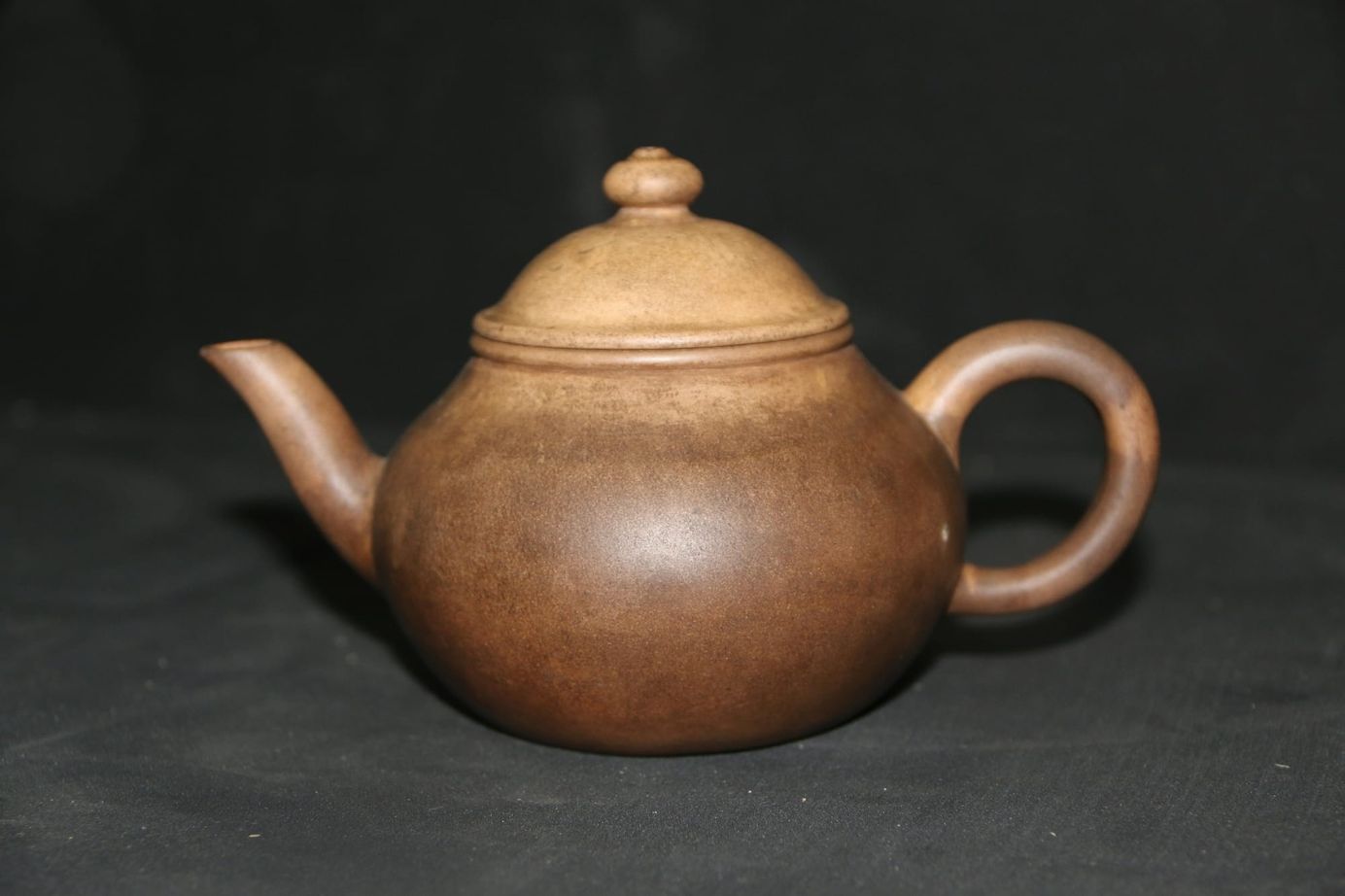
Jingdezhen is such a strange place. There's people doing like legit one-off fanggu (仿古) wares. There's people doing order sizes of a thousand, 2000, 3000 pieces that are still hand painted. The pricing is all over the place. You see a piece and it's like 50 US bucks. And then you see the same similar piece, not exactly the same made by someone else, and it's 500 bucks, and then you see the same piece and it's $5,000. And like prices are all over the place. The things that I'm interested in are really hard to find.
This is my second year going back to Jingdezhen, like I said, build those relationships, keep going back. And both times last year and this year, the one thing I wanted to find was a chaye (茶叶) guan. Little tea jars, like little, little tiny tea jars to store my tea. And what I didn't find is a single good looking chaye guan. And when talking
[00:53:42] Pat Penny: It looks like you're going to Dehua. Looks like you're going to Dehua.
[00:53:45] Jason Cohen: Everywhere I go and I ask them about it and they show me these jars that could hold like three kilos of tea. And it's like, how much tea do you think I have? Like I'm asking for a small jar.
[00:53:55] Pat Penny: You're just not on their level, bro. That's what it is.
[00:53:58] Jason Cohen: I know . Those things look like shou pieces too. Like is anyone actually putting tea in this thing?
[00:54:04] Pat Penny: It's more of a, a weight like counterbalance sort of thing at that point. You just don't want it to fall. So you're just putting enough tea in there to really weigh it down.
[00:54:11] Jason Cohen: Yeah. Weigh it down. Didn't find anything like that. I did see some small ones and they were really hideous. They were like really hideous. Like garishly over glazed.
I found some other stuff. I mean, Jingdezhen is just such a strange place. And there's a lot of different art forms and there's a lot of different people. It's a very transient town too. A lot of people show up, think they're gonna do some ceramics. Stay for six months or a year, and then like, in or out. So it kind of feels very extractive place. And there's definitely a bit of an insular community of people who have been there for a lot longer who are really in industry. And there's very few people doing fanggu wares using old clay, old glaze. And the entire place is anti wood firing. Everyone you talk to is don't pay for wood firing.
[00:54:57] Pat Penny: Oh, that's kind of a surprise.
[00:54:59] Jason Cohen: They do it 'cause people pay for it. Even the people standing there tending the kiln, you're like, do you think wood firing is better? They're like, it's all right. It's different.
[00:55:08] Pat Penny: No, not really.
[00:55:10] Jason Cohen: The tourists like it. And I will say despite this, I still like wood-fired wares.
[00:55:16] Pat Penny: So you paid for it?
[00:55:18] Jason Cohen: Sometimes. I don't know. Maybe it's better to buy woodfired wares from people who like wood-fired wares.
[00:55:24] Pat Penny: Yeah. I probably wouldn't go outta my way to buy it from someone who's like, oh, that's a pain in the ass. I don't know why you do that.
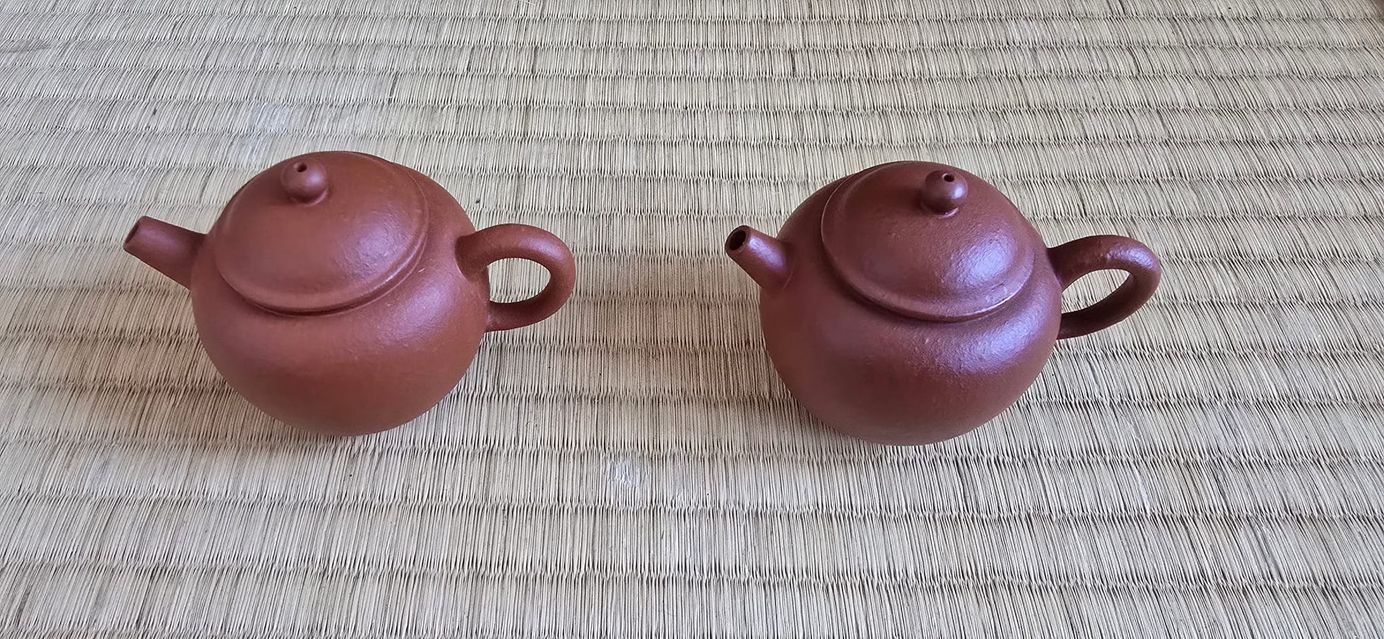
[00:55:31] Jason Cohen: Why are we doing this? And then there's even more incongruous to go from Jingdezhen to Yixing. I went to Yixing after where Yixing batch sizes are like 30 pots handbuilt, or half are fully handbuilt. And you're going from Jingdezhen which can be pretty industrialized and they don't really care that much about the clay itself because obviously if it's gonna be glazed over, then the glaze is more important than the clay. And then suddenly you're in Yixing and batch sizes are like 30 pieces and people are like taking single pieces with like little chips and stuff to repair shops, like in, in Jingdezhen it would just be tossed in the garbage pile. And in Yixing. I'm like, well actually this is worth zhengkou and smoothing and re firing. There's been some real money on these pieces in Yixing in a way that they're not doing, except at the very highest level, the very fanggu focused minority in Jingdezhen.
[00:56:29] Pat Penny: I wonder if just the, the margins, the cost of production versus what they're able to charge for the ware, I think are just so different between Yixing and Jingdezhen. What basically is passed on to you as a consumer of Yixing is really the cost of the clay. And then, the maker's time and skill.
The cost of the base ware for Jingdezhen, it's not really crazy. You're really paying for hand painting and yeah. Even with Yixing, actually we saw this, right? For more of the sculpture and artistic work, the cost of hand painted Yixing wares was actually quite high. And that's really what you'd be paying for. But if you don't care about that, then you can get really affordable products with no hand painting.
[00:57:08] Jason Cohen: Yeah, totally.
And then, very last stop on the trip related to tea was Longjing. I got to go see some Longjing production, and that's an area that you've been to without me.
[00:57:21] Pat Penny: I, I went for work. And so I saw, probably a very specific slice of that. So I'm interested to hear what, what you saw in comparison.
[00:57:29] Jason Cohen: The interesting thing that I saw is that even the handmade tea is really only half handmade. That basically everyone uses the same identical machine for the shaqing (杀青) process, which is a pretty advanced machine. Shaqing less than 200 grams of tea at a time. And then as it comes out of there, then it goes into the hand wok.
[00:57:51] Pat Penny: Yeah. I saw, similar experiences three, four years ago now, but every house, every processor I saw was just like a carbon copy of each other. But yeah, obviously the, the amount of tea that's there is pretty impressive. I mean, you're driving for a while and you're seeing a lot of hills covered in tea. But the scale of production they've dialed down to is very interesting. 'Cause in Yiwu and Menghai, we saw pretty even batch sizes across all houses, all farms. You're basically throwing six kilograms in a wok. Longjing is kind of strange. You've got a lot of micro batches happening in Hangzhou, and that's kind of the norm. And that, that was weird to me when I saw that.
[00:58:29] Jason Cohen: Yeah. Did you see differences? So, one village, there was just one maker I saw, he still used the machine and then the hand wok, but his hand wok skills seemed to be superior. He was actually doing his hand wok without a glove. And his tea tasted very good and I, I thought it was quite an interesting experience. He let me have a try on the shaqing, on the hand wok. Burned myself immediately. And didn't have enough skill for him to let me do the entire batch. But I got to do a little bit, and it's hard. It's very different.
[00:59:04] Pat Penny: It's hot, man.
[00:59:05] Jason Cohen: It's hot. It's very different than puer, where puer is like, basically toss it and make sure it stays at the right temperature. In Longjing you're both,
[00:59:13] Pat Penny: You're shaping.
[00:59:14] Jason Cohen: Shaping the tea.
[00:59:15] Pat Penny: Yeah. And I think that shaping, that pressing has an impact on the flavor profile too. Not, not just from the shape point of view, but the way that it's being pressed into the wok. You can think of like a smash burger, right? I mean, it's, it's gonna change right? The way that the tea is being cooked on the inside, and
[00:59:29] Jason Cohen: It's like a light toasting. It's what gives it that beautiful, nutty flavor.
[00:59:32] Pat Penny: Yeah. And I mean, yeah, it's a skill. I've seen videos when I was there, no one wanted to hand process. I didn't see, I saw, they showed me videos on their phone. I saw the machine processing, but I didn't see any hand processing, so that's really cool that you got to actually touch it.
[00:59:45] Jason Cohen: I got, I got to touch it, and then I was in a different area. I went to three villages while I was up there and in the main village which is Longjing Village is a zoo. I mean, oh my God. There are so many tourists and hikers and cyclists, and
[01:00:02] Pat Penny: I sat in traffic for like an hour. Just trying to get up there and then trying to get out was worse.
[01:00:08] Jason Cohen: Yeah. I spent an hour and a half to go down the mountain in what should have been like a 40 minute ride.
[01:00:13] Pat Penny: Yeah. No, it, it, it's, it does not feel magical or unique or special. Like the views are beautiful when you're out there. But when you're sitting in traffic, like slowly pulling up to a gate for an hour, you're like beautiful tea area. Yay.
[01:00:27] Jason Cohen: I actually just got out. On my way up, I just got out like a kilometer early and just hiked it 'cause I could walk it up the stairs.
[01:00:35] Pat Penny: Way faster. Yeah.
[01:00:36] Jason Cohen: Faster. And I was like, all right, thank you. Goodbye. And it was, it was nicer. But on the way down I didn't have that luxury, so I was stop and go traffic for an hour and a half.
No, it did, it did not feel magical. But in the other villages, in the less touristed villages, it wasn't so bad. It was just that I left from Longjing Village to go see the Longjing well and the standard sites.
[01:00:58] Pat Penny: Yeah. Yeah. I also saw the well, but okay.
[01:01:02] Jason Cohen: Yeah. It would be more interesting if you could still drink from the well.
[01:01:05] Pat Penny: Yeah. Not any longer.
[01:01:07] Jason Cohen: No. There were some ancient springs, mountain springs when you and I were in, in South Korea that the monks and some tea people had like channeled these ancient springs and were using that water to brew tea.
[01:01:22] Pat Penny: And that was awesome. There's, there was none of that in Longjing.
Yeah, they showed me, Hey, here's the original famous bushes. Here's the dragon well. And then this is a house that I can't remember if it was Xi Jinping or if it was Mao Zedong, I can't remember who they said stayed there, but they were like, this is a house that was important for political reasons.
[01:01:41] Jason Cohen: Yeah, I think that those 18 trees aren't actually that old or they're like regrowth from
[01:01:46] Pat Penny: After being in Yunnan and after being in Chaozhou, yeah those bushes don't look particularly old, but, who knows?
[01:01:54] Jason Cohen: Yeah, I found some good Longjing tea. I think one of the things that's kind of difficult for me, and, and I wonder if you have this experience, is now having been in deep forests and different forests and seeing these big ancient trees, both in Yunnan certainly and even to a lesser extent in, in Wudong seeing these huge, beautiful ancient trees. And then going somewhere like Longjing and field after field, it is a beautiful sight, but like field after field of these tended manicured trees and being like, okay, well Longjing doesn't have any history of lao cong and doesn't really have any history of this idea of older bushes or anything. And it's like, you go there and you're like, is I, I find it a little incongruous at this point to say like, is this good? Should I be drinking this? And I, and I like Longjing, I like the taste of Longjing, but I don't know. There's something, there's something that nags me in the back of the psyche to think like, how should I evaluate this. If I'm writing all this stuff about the environment and then I walk into Longjing, like Longjing rocks, right? Like.
[01:03:06] Pat Penny: This shit's sick.
Well, so when I was in Hangzhou and went to Dragon Well and everything, I was, I was there for work and so it was a very, like, hmm, this is pretty, but it's a very corporate feeling experience and the touristy feeling experience. And, I didn't get out to any of the further villages. But if it looked anything like what it looks like around Longjing Village, later on that same trip is when we went to Wudong and that was kind of, I think I told you guys at the time that it was just like, so night and day, like, being in Hangzhou and going to Longjing just feels like, it, it does feel like a tourist destination.
Whereas many of the other tea sites we've gone to feel like you are going to a tea mountain. There is a different feeling to the air. There's a different feeling to like the earth. I think a lot of what we pay for for Longjing is like one origin, right? But I think there's a lot of branding and a lot of story. You do need to be able to separate, I think the flavor of a tea, right? And the, the type of tea. You can't really say, you know, hey, you can say right, this dragon wall is good for these reasons, this puer is good for these reasons. They don't have to be the same reasons. It does get harder when we start to look at what makes puer good. And why that's not the same for Dragon Well.
[01:04:22] Jason Cohen: If only someone had like some secret little jian or keng making laocong Dragon Well.
[01:04:32] Pat Penny: Yeah. Taidi gushu, sheng tai Dragon Well.
[01:04:36] Jason Cohen: Yeah. Or just let the trees grow big.
[01:04:39] Pat Penny: I mean, it, it does kind of go to what we were talking about with this factory tea though, where, yes, it's not impressive forest tea, but I'm sure there are areas around Hangzhou where you do have some less intensive garden management.
But you know, once again, these aren't gonna be probably the, the famous tea areas. These are the maybe in the know secret little nooks. So yeah, it, it does get hard when we start to talk about price and quality though.
[01:05:05] Jason Cohen: To evaluate that. I don't know, that's, one day maybe a Longjing book and we'll go seek out was some... just as a whim I was with some friends in the Longjing area, and we walked up to one of the maker houses and we're like, hey, do you have any lao cong Longjing? They're like, lao cong Longjing? It was my friend speaking who's native Chinese, and like,
[01:05:28] Pat Penny: And he just looks at you and he goes,
[01:05:29] Jason Cohen: At first they didn't understand her.
And they're like, lao cong Longjing? Oh yeah, I think we have some of that. And then we were like clarifying like, what do you have? And they're like, ah, a hundred year tree Longjing. No, we don't have that.
[01:05:43] Pat Penny: No one has that. No one makes that. Please go back to Longjing Village.
[01:05:47] Jason Cohen: Why don't you try some more of our tea?
Just as a whim, we weren't sure what we would, what it, the response was more educational than whatever they were actually gonna have .
[01:05:56] Pat Penny: Yeah. Yeah, Longjing didn't leave a lasting impression on me. But yet I persist and I will continue to drink Longjing because we enjoy it for a different reason, but maybe one day we'll do a deeper dive.
[01:06:08] Jason Cohen: Deeper, deeper dive. Hangzhou has great food.
[01:06:11] Pat Penny: Oh, good coffee scene too, actually.
[01:06:13] Jason Cohen: I was impressed by the coffee scene in Kunming.
[01:06:15] Pat Penny: Yeah, China's coffee scene in all of the, even like tier three cities, is still way above where a lot of the US is kicking.
[01:06:24] Jason Cohen: Yeah.
[01:06:25] Pat Penny: Like tier one cities coffee scene is insane in China.
[01:06:29] Jason Cohen: There's some great stuff going on. Really heavily specialty drink focused.
[01:06:32] Pat Penny: Yeah. Even in Jing Hong (景洪) we found good coffee.
[01:06:36] Jason Cohen: We found surprisingly good coffee . Have you tried the bag yet?
[01:06:39] Pat Penny: I finished it.
[01:06:40] Jason Cohen: We haven't opened it yet. We just finished a different bag of coffee, so tomorrow we're gonna,
[01:06:43] Pat Penny: No, I enjoyed it. I really enjoyed it.
[01:06:46] Jason Cohen: Did it, was it easy to dial in?
[01:06:48] Pat Penny: No, it was easy to dial in. This was a very easy coffee to brew. I mean, it's a little bit more medium roast than a lot of what we drank, so it was quite easy to brew and very approachable for my colleagues.
[01:06:58] Jason Cohen: Cool. Oh, that's right. You got to share it at work.
[01:07:01] Pat Penny: Yeah.
[01:07:02] Jason Cohen: I had to buy it with my own hard earned cash.
[01:07:04] Pat Penny: I share and I show experiences to people and it pays for itself.
[01:07:09] Jason Cohen: That's the job.
[01:07:10] Pat Penny: Yeah.
[01:07:11] Jason Cohen: Any final words?
[01:07:13] Pat Penny: Just, TRT 20 27 is gonna look really different.
[01:07:16] Jason Cohen: Yes, it is. I think we're doing, we're, we're gonna do some things, but I think hopefully we'll actually hit two spots next year. The single spot's been great for a bit, but I think we could use some variety in our lives.
[01:07:29] Pat Penny: I agree. I agree. I don't wanna be Menghai bro the rest of the year.
And, and I was not converted by this trip.
[01:07:35] Jason Cohen: No. We got some good stuff coming. I'm gonna do some TTT tastings. And let's see. We, we, we might be converted yet.
[01:07:44] Pat Penny: Yeah. We are gonna be getting tea in from Menghai. You know, we did some commissions, we did some orders. So we'll see if those change how we feel about Menghai.
[01:07:54] Jason Cohen: We will.
Alright that's all the time that we have for today. Thank you all for joining us in this special edition of Tea Technique Editorial Conversation. Please join us for our next editorial conversation where we finally resume talking about the chapters.
Errata: 09:34 Jason discusses the age of the plantation tea as over a hundred years old. At the time, the local contacts described this plantation as "gushu shengtai taidicha", but they were using the term gushu colloquially for dashu/xiaoshu, not in the forest tea sense of the term. In any case, we, the editorial team, should have been a little more hesitant to repeat the claim. During our standard fact checking process, we found that these trees pictured are all approximately 38 years old, dating from the plantations founding in 1988. That's old for plantation tea, which is usually ripped up every ~15 - 20 years - many contemporary eco-gardens in other tea regions call 30+ year tea bushes "laocong" which is an abuse of term the editorial team avoids - but it's not old enough to merit the distinction of "gushu". That doesn't change our reassessment of the tea from this plantation, but it does deserve a clarification to our readers and listeners.

%20-%20Post%20Trip%20Editorial%20Conversation)