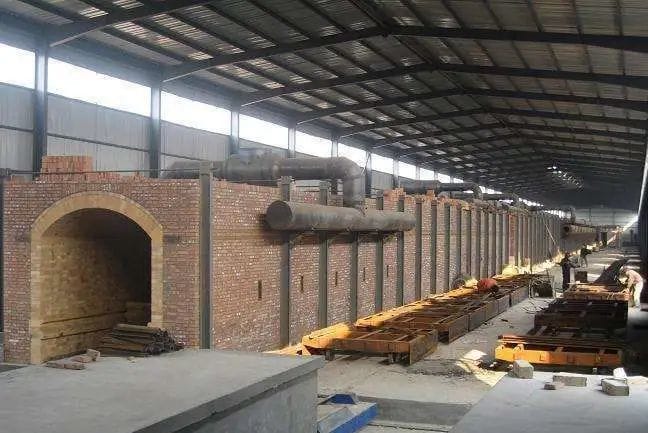
Editorial Conversation: Chapter 10, Section 5: Tunnel Kilns (隧道窑)

The episode is also available on YouTube and Spotify.
A full transcript is included on the episode page and below:
[00:00:05] Jason Cohen: Hello everyone. I'm Jason Cohen and the author of an Introduction to the Art and Science of Chinese Tea Ceremony. Today we're discussing book two, chapter 10, section four Tunnel Kilns. Here to talk about this chapters are editorial team Patrick Penny.
[00:00:19] Pat Penny: Hey, hey.
[00:00:20] Jason Cohen: And Zongjun Li.
[00:00:21] Zongjun Li: Hello, hello.
[00:00:23] Jason Cohen: Hello, Pat. Hello, Zongjun.
My first question, what is a tunnel kiln and how does it differ from the prior kilns we've discussed?
[00:00:30] Zongjun Li: Well, it's different in many, many ways. I guess we can talk about some of the specific difference in other questions. But tunnel kiln is very, very long. It's frequently longer than some of the longest dragon kiln. And all of these wares are fired in a continuous way. So it starts preheating in the beginning. And then there is a section of the firing belt, where the wares gets actually centered. And then as the wares exiting out of the tunnel kiln, it starts to cool down. So there's a temperature difference across the kiln and a ware will through each section of the kiln in a temporal manner.
[00:01:17] Jason Cohen: If you can help visualize this, either one of you, this is literally a tunnel, right? The wares are moving from the entrance of the tunnel, through the tunnel and then exit the tunnel.
[00:01:27] Pat Penny: Yeah.
[00:01:27] Zongjun Li: That's right.
[00:01:27] Pat Penny: I mean, when we think about the big difference on this versus other kiln, it's really that movement, right? When you think about dragon kiln or if you just think about any kind of gas or electric kiln, wares are not moving through it. But this tunnel kiln, that idea of motion, I think is really what sets it apart.
[00:01:44] Jason Cohen: So this kiln is actually mechanical in some way. It's, it's taking wares and pulling them through the kiln or pushing them through the kiln.
[00:01:52] Pat Penny: Yeah. And I think we're gonna talk about pushing a lot more in this chapter.
[00:01:56] Zongjun Li: Yeah.
[00:01:58] Jason Cohen: What are the advantages or disadvantages of a tunnel kiln? Why were they brought to Yixing?
[00:02:04] Pat Penny: Tunnel kilns allow you to have this continuous batch of product going through the kiln. So when you think about firing in like a downdraft kiln, electric kiln, you have a batch that goes in, you need to go from heat up through centering, cool down, and that's one single batch that's being finished in what can be up to days.
With this tunnel kiln, it really allowed for the collectivized labor and industrialization of Yixing ceramics as a whole from an art to become an industrial product where you literally have what, what is like basically a conveyor belt for firing. So you can have many more batches going through a tunnel kiln.
Your output is probably able to exceed that of a single batch downdraft kiln. You are also still able to maintain quite a degree of control too, which I, I'm sure we're gonna talk about. But through stacking some of these saggars, you're able to not only fire continuously and a large volume, but you can fine tune really your firing as well. So I think they really just allowed for the industrialization and modernization of the Yixing industry.
[00:03:10] Zongjun Li: Yeah, it's far easier to manage a tunnel kiln versus other kiln 'cause for tunnel kiln, there's no such thing as a cool down period for the kiln itself. So the kiln can be used for much, much longer time without a maintenance. Frequently five to seven years, you literally just have the kiln continue being used. You're just adding into the kiln and the temperature of each section of the kiln pretty much remain the same. So that's why you don't really have any kind of contraction or crackage of the kiln itself.
So that's much superior and you do have some level of temperature adjustment of each section of the kiln depending on how you stack the sagger and how do you stack the wares. But I guess, one of the shortcomings for tunnel kiln is that you cannot really adjust the kiln atmosphere. So you basically cannot fire Wuhui (焐灰) or any kind of wares that require reduction fired or any of the wares that required a very high temperature. 'Cause even though you can adjust the temperature gradient, it's really varied anywhere from a hundred to 200 degrees. So if you want to fire a super high temperature ware like a zhuni (朱泥), then it'll be very difficult.
[00:04:26] Pat Penny: I think Zongjun touched really nicely upon the consistency of temperature within each section of the kiln as it related to maintenance. I think another interesting area is consistency of the firing, right? So, if an artist puts in a pretty consistent ware, they can expect a pretty consistent outcome.
Whereas single batch firing, like in a downdraft kiln, because of potentially different kiln atmosphere, different fuel source that product could go many different ways for the outcome. But tunnel kilns are gonna allow a, a very consistent output for an artistic product.
[00:04:59] Zongjun Li: Yeah, that's very true. For the usage of tunnel kiln, we're talking about like F1, F2 period, it was really when the production of Yixing moving from a artisanal product into a industrial product. You are aiming for a consistency. You're aiming for exportation of millions of pieces a year. So that's very, very important.
[00:05:20] Jason Cohen: Are there subtypes of tunnel kilns?
[00:05:23] Zongjun Li: I'm sorry, Jason, you said subtypes?
[00:05:27] Jason Cohen: Subtypes, like different forms or different types of tunnel kilns.
[00:05:31] Pat Penny: One type that we got to see when we were in Yixing and Jason, you write about in here is the pushed-bat kiln, which when we were in Yixing, I thought it was called a pushback kiln, which still makes sense with the mechanism that I, I saw. But you talk a little bit about the translation in the chapter, but it's basically that you've got these giant ceramic blocks and a battering arm or a battering ramp that pushes the blocks continuously through the kiln at a very specific time point where basically a new block is able to be added every 15 minutes, and then saggars will be stacked on top of it.
[00:06:04] Jason Cohen: I think that that footnote might be worth reading here. It's called a pushed-bat kiln. And in this chapter we write, the etymology here seems to be English bat as in battering ram, not bat as in the animal. If so, the co-option of the prefix bat is an incorrect spelling and pronunciation of the old French batre to hit, to beat, to strike. Though I admit that a batre kiln is a name more appropriate to a French pastry oven than a ceramic skill.
[00:06:32] Pat Penny: Making me hungry.
[00:06:34] Jason Cohen: How, how does that score in the irreverence for footnotes, side notes here in this book?
[00:06:40] Pat Penny: Yeah, it's a, it's a, it's a five, a solid five outta 10 on a reverence. You've got a few more spicy ones.
[00:06:46] Zongjun Li: Very deep etymology research.
[00:06:51] Jason Cohen: Well.
[00:06:51] Zongjun Li: That really confuses me 'cause when we're researching the name of such kiln, like that was actually the name for people calling it. So very confusing for me in the first place.
[00:07:05] Jason Cohen: Yeah, Zongjun had thought it was just a lucky kiln.
[00:07:09] Pat Penny: Very auspicious kiln.
[00:07:12] Jason Cohen: Deep, deep, deeply linked to to, to Chinese symbolism. Need a fire,
[00:07:20] Zongjun Li: Downdraft, downdraft bat.
[00:07:21] Jason Cohen: Need to fire a Yixing ware, use the bat symbol.
[00:07:28] Pat Penny: Brings a whole new meaning to Batman. I like to read those comic now and just think about him as a, a serious Yixing collector and artist. That's how he earned his money.
[00:07:39] Jason Cohen: Wayne, Wayne Industry is maker of a pushed-bat kiln.
The pushed-bat kiln that we saw had a gigantic mechanism, huge mechanism in order to push these wares through. When people think about these kilns, these kilns could be a hundred meters long. Although the pushed-bats are usually a little bit shorter than them, maybe 60, 70 meters long and it is pushing stacks of Yixing saggars. Each that has 10, 20, 30 different Yixing teapots in it piled five high, 60 meters. So you're talking about a mechanism that can push more than a ton of weight.
[00:08:12] Pat Penny: Thousands of pounds, for sure. Yeah. And I mean even, even just those ceramic slabs, we didn't pick one up individually, but I assume they're quite heavy.
[00:08:19] Jason Cohen: So this is, this is a major piece of industrial equipment. We're not talking about something, something that you hand crank or push with your feet. We're talking about something that's, that's able to apply thousands of pounds of force in order to move these wares through the kiln and do it under a very high temperature environment.
My next question, can you explain how tunnel kilns were the first instrumented kiln?
[00:08:43] Zongjun Li: Compared to dragon kiln or downdraft kiln, this is really the first kiln that applied a lot of mechanical equipments or industrialization mechanism into it. And we're not only just talking about the oil pressed mechanism that pushed the bats but also like temperature controls and regulations and also regulations of fire elements that were coal and sometimes heavy oil in the later stage of the time.
[00:09:12] Jason Cohen: And then natural gas.
[00:09:14] Zongjun Li: And then natural gas. Eventually.
[00:09:16] Jason Cohen: The coal loaded kilns, I, I don't believe had it, but everything after the coal loaded kilns had actual electronic instrumentation. It was the first kilns to have temperature gauges, the first kilns to have some types of PID controls in the most modern kilns.
What, what did this do? What kind of effect did this have on the skill of firing? Firing is still a skill? Did this diminish the skill? Did this move the skill from the individuals manning the kiln to the Yixing artists? What effect did this have sociologically on the practitioners of making Yixing teapots?
[00:09:50] Zongjun Li: It's certainly a diversified or segmentize the expertise, right? Just talking about firing using heavy oil alone. Heavy oil is not very easy to manage. Without proper heating in advance, heavy oil is very, very sticky. It can just clog the entire system.
So, you are going to have like some heavy oil management expertise on site too alongside with all the other Yixing makers or even kiln managers or even bat managers. Like, all of these slowly becoming a very, very diverse and complicated ecosystem almost. Instead of just in the past, one or two people can be able to manage a downdraft kiln very easily.
[00:10:37] Pat Penny: I think a big difference is also the type of expertise. So, when we think about a dragon kiln or a downdraft kiln, you have somebody who, and probably multiple people on site, who are really conscious of the time and temperature that wares have been exposed to. So they're able to see and feel with their senses if a kiln is hitting the proper temperature that they want it to, they're able to see what, what kind of fuel source additions they need to be doing at what times. And they have to really actively be there, right? And present and paying attention to those things with their senses in order to manage the firing over the course of a day to multiple days.
Whereas now with electronic instrumentation, they're able to very clearly see, you know, it's not, oh, the kiln looks like it's 1,200 degrees. They're able to get an electronic output that's actually telling them what kind of fuel addition is needed or not needed and when the right timing of that might be. And as we get into PID control and systems that are in place for this, eventually you're having the fuel being managed by electronic instrumentation as well versus people loading it in at a specific time. So you really see the transformation of it from I think something that was quite, involved a degree of expertise and sensory kind of mastership of being able to see and experience these things and knowing when to apply your knowledge versus having the data readily available and systems that can act upon it versus the people acting upon it.
[00:11:58] Jason Cohen: Is there a balance there? Have the Yixing artisans gained new skills by using this type of instrumentation or access to this data? Or has this just been a source of skill atrophy? The kilns fire themselves basically, at this point. They're computer controlled.
[00:12:14] Pat Penny: I think the best artists still experiment. Many of the artists that we commission with and talk to, because of the increased consistency in some of these kilns, over time with experimentation, they've learned exactly what they're trying to achieve. And now they can do it with a consistency that probably could not have been achieved if they were to do it certainly a dragon kiln. I mean, we hear complaints about them from quite skilled artisans.
But even a downdraft kiln, electric, or wood fired, there's a degree of control particularly I'd say in the wood fired that they're not able to achieve. So through I think this mechanization and experimentation, the good artisans are still building new sets of skills.
[00:12:53] Jason Cohen: One of the ways that I think about this is both cooking and tea, people are notoriously, they overrate their skills at certain things, particularly telling time and how much tea they think they're using. So, Pat and I at least have had this conversation before. I now weigh all of the tea that I use and some people have positive or negative reactions to it, but what I do is I try to go for the dose in my hand and then I check my work on the scale. And I would say more often than not, I'm wrong. And anyone who's cooked with me, hot side fast cooking will know that I have a timer set to one minute, and every one minute the timer is going off. And it drives some people crazy. But if, then you ask them, okay, you, try to do this without the timer. Try to time one minute, and they'll be all over the place. And almost always, they'll be longer than a minute. They think a minute is longer than it is. Like calling a minute in a minute and a half or two minutes.
And so I think that these types of timings or these types of weighings or these types of interaction with instrumentation can be a source of skill atrophy if we were just to use the timer alone or just to put the tea on the scale immediately. But it can also be a source of positive feedback, developing a skill set through a positive feedback loop by consistently checking your work, saying to yourself, I, I believe that this is three grams and you, this was 4.5 grams. Right? And if, if you do that repeatedly enough, maybe you'll gain some ability to better estimate how much you're using without the scale. That was a little bit of inside, but...
[00:14:24] Pat Penny: Yeah, but I think what you're saying is, the good artisans now have the data with this positive feedback loop in their experimentation. Right? So they can say that, I know that this saggar hit 1,170 degrees and that worked really well for the specific blend of clay that I was using. And, oh, I'm trying to achieve maybe a slightly shinier exterior or I'm trying to achieve a porosity that's slightly different, they can then change their experimental design from there. So certainly this is a positive feedback loop.
[00:14:52] Zongjun Li: Before the implementation of electric kiln, the artist first time can have some kind of quantifiable details of how their wares actually gets fired.
[00:15:03] Jason Cohen: At a more precise level, certainly. I was actually about to say something almost the opposite of that, which is that this could be seen as a break from tradition, but actually there's always been some sense of timing using burning incense sticks or in China they say joss sticks, where the joss sticks took a pretty consistent amount of time to burn. Later, particularly during F1, joss sticks were seen as potentially religious connotations, which was a no-no for part of that time. So they actually smoked a cigarette, and the cigarette took approximately five, six minutes to burn for time sensitive operations.
But kilns have been using cones, right? Standing, leaning pieces of clay and watching the clay melt, you can determine approximately how much energy was in the kiln. It's not super exact. It varies and you only get it in certain placements and you can't see a kiln cone put into a saggar, so you don't know exactly what it is, right? But I see it less as a break in more of a continuation of this idea of collecting data to create these feedback loops of knowledge, which is necessary in order to gain skill.
[00:16:06] Pat Penny: Just more consistent data basically over time and repeatable data.
[00:16:10] Zongjun Li: And less incense being burned. Better for the environment.
[00:16:14] Pat Penny: Let's save, let's save all that sandalwood, agar wood. Let's not burn it for timing.
[00:16:19] Zongjun Li: Just a side information. Yi zhu xiang or one joss stick of incense is usually half an hour. I think that's, the common understanding.
[00:16:29] Jason Cohen: That's a lot of cigarettes.
[00:16:33] Pat Penny: I think they're still using the cigarettes. It's just not for timing anymore.
[00:16:37] Jason Cohen: You went from one joss stick to five cigarettes.
[00:16:40] Zongjun Li: Five cigarettes.
[00:16:41] Jason Cohen: I hope it wasn't all one guy.
[00:16:45] Pat Penny: No. They were all smoking five cigarettes. All of them.
[00:16:48] Jason Cohen: Through with everyone together. Alright. Now,
[00:16:51] Zongjun Li: Professional cigarette smokers as the timer.
[00:16:56] Pat Penny: To be fair, this was one of actually when we went to the pushed-bat kiln that we had seen, that was one of the few places where I don't actually feel like I saw people smoking. I don't feel like I saw them smoking there.
[00:17:06] Zongjun Li: So a lot of natural gas fuel sitting around itself.
[00:17:10] Jason Cohen: Yeah. I wonder if they had like no smoking signs or something we didn't notice. Like do not smoke around all the liquified natural gas flowing through.
[00:17:17] Pat Penny: We'll have to look at our pictures 'cause yeah, thinking back now, like that's definitely one of the spots where we didn't run into cigarette smoking. But like ore processing and teapot shaping and everything else, it's not like people were consistently smoking in their studios, but there's a lot of smoking going on and not inside the pushed-bat kiln kind of environment.
[00:17:35] Jason Cohen: We finally have an answer to part of Joseph Needham's question. Why did timers come into the pushed-bat kilns?
[00:17:41] Pat Penny: Safety considerations?
[00:17:44] Jason Cohen: No, no smoking. This is creative innovation.
[00:17:49] Pat Penny: We cracked it here. We cracked it here first on Tea Technique.
[00:17:53] Jason Cohen: Tunnel kilns in Yixing at the time of their adoption, circa 1965 were coal fired. Can you give our listeners an abbreviated developmental history of the fuel sources for tunnel kilns throughout their development in use in Yixing?
[00:18:07] Pat Penny: Yeah, I'm pretty sure it goes from black coal for a few years, shifting as we've mentioned earlier, into heavy oil. And then from heavy oil eventually we get into natural gas, which is what we're doing nowadays as well.
[00:18:21] Jason Cohen: And I spend a lot of time in this chapter on reviewing, re-reviewing kiln atmosphere and how variations in atmosphere and the timing of atmosphere during a ware's firing can affect material properties. So how did these transitions, both to tunnel kilns and throughout these different fuel sources affect the kiln atmosphere and the resulting fired teapot's interaction with its material properties?
[00:18:46] Pat Penny: All three different sources of fuel have very different levels of complete combustion. Even shifting from like coal to heavy oil, I would assume that there's a, a lot more conversion and complete combustion occurring. So you create a much cleaner and less reducing kiln environment or more oxidizing kiln environments or neutral. And I'm sure as we shifted to natural gas too, you were getting an even more neutral combustion, right? So, more consistent color development, more consistent textural development as we're shifting fuel sources.
[00:19:20] Zongjun Li: It seems like a lot of people argue that heavy oil or at least a period of heavy oil tend to produce higher quality wares than wares produced from other fuel source era. I, I wonder why, actually. Is it the heavy oil tend to have the higher thermal value, which might result in a higher temperature, maybe? Do any of you have a guess?
[00:19:44] Jason Cohen: I'm not certain about the energy density of heavy oil, but I do know that the black hole that they were burning was really dirty. A lot of smoke, and it did not produce the correct atmosphere for the best Yixing wares.
[00:19:59] Zongjun Li: A lot of smoky yaobian (窑变), I guess.
[00:20:03] Jason Cohen: Because I've never heard anyone complain about liquified natural gas as a fuel source. People complain about various things about electric kilns and coal burning kilns. We've never really heard a sustained meaningful complaint about the use of liquified natural gas.
[00:20:22] Zongjun Li: Interesting.
[00:20:22] Pat Penny: I don't know. Yeah. That, that sounds like an area of further exploration for us. I, I certainly, I've heard the same thing, Zongjun, that there's a few years where people believe that some of the best pots were being fired with this heavy oil. But I can't think of a single reason why it should be better specifically from the fuel source.
[00:20:41] Jason Cohen: My best working guess is that there was a big step up in quality with the switch from coal to heavy oil. And then there was a step down in quality with natural gas 'cause it coincided with the second major increase in production and the use of non master artisans and lesser wares flooding the market in the later periods towards the end of F1. That's my best guess is that the first is related to the tunnel kiln, and the second is, is timed with the tunnel kiln, but unrelated to that change.
[00:21:14] Zongjun Li: Experiment proposal. Let's bribe the local Asian government and commission the tunnel kiln to reuse heavy oil again and do a side-by-side firing with gas kiln. And we tested.
[00:21:26] Pat Penny: We just, we just need to find a government willing to try and export heavy oil into China. I think we, we know a couple people. We, we'll figure it out.
[00:21:35] Jason Cohen: In this chapter I write, the complete transition to tunnel kilns represents the point of full modernization for Yixing ceramic arts. With the conversion of zisha ware production to a continuous firing process, not only were the attributes of the kiln, including the fuel source, atmosphere, and time temperature curves changed. The firing process itself was adapted to the new standard of double firing, where each ware is fired twice throughout the kiln. These changes of the firing process taken together represent a sharp break with the artisanal batch process and single fired standard of the original art form. Do you agree with this assessment?
[00:22:12] Zongjun Li: I agree.
[00:22:15] Pat Penny: Yeah. Boring answer. Yes. We, we've had the opportunity to test pots that are single versus double fired. And I think a lot of those pots showcase some of the differences between more artisanal and more modern craftsmanship.
[00:22:28] Jason Cohen: With that said, then how can we explain the reasoning and the, the motivations for zisha artisans to move to double firing, and how does double firing change the material properties of the wares?
[00:22:40] Zongjun Li: Definitely, I would say the improvement is a much, much better fit of the tea pot and the lid. Because double firing allowed the wares to be fired in a way that it will be very tightly sealed together in the first place. And, you frequently will see people using a little wood hammer to remove the lid from the ware after the first fire. And then the lid and the teapot body will go through a process called zhengkou (整口), which mean basically you are mounting the lid on a, a rotating metal polish. And then you are going to very elegantly polish the lid so that the lid can be tightly fit back into the body of the teapot again. And then it will go through a second fire.
[00:23:25] Pat Penny: I would say a, a little good and a little bad. Thanks to double firing, I think there's consistency in the level of firing for a lot of teapots. So I don't think you expect a, a wild swing in performance from one pot of the same material from the same maker to another.
But I would say that, I do find double fired pots to have less interaction with the tea. And I find to have, for better or for worse, less effect from these double fired teapots. So sometimes that's good. If you're really looking for a teapot to have minimal interaction with your tea then a double fired teapot is fine.
But I think that you, you often run the risk of these pots being more than double fired. Sometimes modern pots are triple, four times fired depending on what the pot maker was trying to achieve, or what they think is the most important attribute. Sometimes visuals are the most important.
And so, with single fired you, you don't, I think, run the risk of these over fired teapots. You have a lot more interaction between tea and clay. And so you, you really are, I think, getting the experience of using a pot. I, I haven't really run into any single fired, over fired teapots. I don't know if you guys have, unless it was purposeful.
[00:24:32] Zongjun Li: It would be very hard.
[00:24:34] Jason Cohen: Antique over fired. But never, never tunnel kiln, over fired.
[00:24:40] Zongjun Li: Probably a misplacement of the ware in the kiln back in the days. But now
[00:24:46] Pat Penny: You do get, you do get under fired, single fired wares. But, those are things where if you're buying in person you can touch the pot, hear the sound, and you're, you're gonna have an idea if it's under fight or not.
[00:24:56] Zongjun Li: Yeah, well, multiple fires tend to vitrify the teapot more and frequently the second fired is in a different kiln than the first fired. Sometimes it's electric, sometimes it's wood fired to achieve a certain aesthetic outlook and certain clay performance. So that's very interesting to see.
[00:25:19] Jason Cohen: Yeah, there's certain, there's certainly a lot of experimentation on the mix of firings. Historically, of course, it was all double fired in the tunnel kiln, with the second firing a little bit cooler.
My, my leading theory is that the issue with the double firing is of course the vitrification, but it's also the lack of the production of surface texture, which is caused by the fluctuation in atmosphere and the non flat heat curve, right? That a normal kiln, which is loaded multiple times with fuel, goes through a slightly sinoidal increase and decrease, and those little temperature fluctuations with the variations in atmosphere served to promote surface texture, which is the nucleation points and the catalyst for a lot of Yixing's interaction with tea in, in my theory.
[00:26:11] Pat Penny: That's important because I think what we're trying to say is that we don't just like old teapots 'cause they're old, but we do think there's more of a material effect and we think that this single versus double firing and, and as you mentioned kiln loading, change in atmosphere, et cetera is a hypothesis for why that exists.
[00:26:28] Jason Cohen: Zongjun you had started talking about zhengkou, you, you used the word polish. Most people use the word grind. Do you wanna explain a little bit more about the process of zhengkou? You, you had said that it's fired, it gets ground down to size. Can you explain when and where? And then there's a couple of intermediate processes before it's put back in the kiln and fired again.
[00:26:49] Zongjun Li: Yeah. After the first fired, where taken out from the kiln, it will first get inspect of certain imperfections. So sometimes you have some small explosions or chips happening throughout the first fire. This is a time for you to do a little bit of a makeup. Sometimes you can add some clay back to the ware to smooth the surface out a little bit. And then, the lid sometimes are too tightly sealed with the body, so you need a little wood hammer to very gently hammer the lid out from the body of the teapot. And then it will be mounted on a thing called tiequan (铁圈) or gangquan (钢圈). It basically means a iron ring or a steel ring. So this is basically a, a sanding mechanism. So, the rim is applied with quartz or different grain size of the materials so that you can carefully sand the surface of the lid or the mouth of the teapot body so that you can very carefully adjust the diameter of these components so that they can be a better fit with each other. And then after the process the teapots will be collected back to a, a tray. And then it will put back into the same kiln or different kiln for the second fire.
[00:28:07] Jason Cohen: Are there any negative effects of this? Or is this, is it just an aesthetic touchup and it's totally benign?
[00:28:14] Pat Penny: I think for the most part it's an aesthetic touchup, but sometimes, depending on who the artisan is, there might be different clay applied after zhengkou. So if let's say small iron pieces are removed or a little bit of slip needs to be reapplied, it might not be the same clay that was making up the interior of the teapot body. And that might have a different material interaction with your tea. It's possible it's an inferior clay.
[00:28:36] Zongjun Li: Yeah. Like for artists that are more attentive, they frequently will carry the same clay back to the zhengkou studio and apply the touch up themselves. But if you commission the process totally to a zhengkou studio, you are you don't know what you're getting served at the end.
[00:28:56] Pat Penny: I think zhengkou was one of the things I didn't mentally picture at all when I was thinking about the Yixing process making a pot before I had physically gone to Yixing. I think I had read many guides on like how a Yixing is made and all that. But that was a process that just had never crossed my mind that needed to be done.
[00:29:14] Jason Cohen: They left out the industrial sanding.
[00:29:16] Pat Penny: Yeah, the guy sitting there, also not smoking a cigarette from what I remember, but just with the foot pedal, sanding down a teapot lid.
[00:29:25] Jason Cohen: I think a lot of the books are a little idealized. For high quality makers, I don't have an issue with zhengkou other than it requires a double firing. There's a lot of talk about loose lids and why lid fits perfect now all because of zhengkou. But I think really the important part of this transition is the double firing versus the zhengkou process.
My pent ultimate question, still talking about technology. How did saggars change with the modern industrialization of tunnel kiln firings? We think of saggars are a form of technology, a form of kiln technology they co-developed with the kilns that they were used in. How did saggars change with this modernization?
[00:30:08] Zongjun Li: One thing that you see different is that it not only prevent the process, what we call re huo (惹火), so basically the flame kind of affect the surface color texture of the wares, it prevent the wares from touching the flame directly. And you see variations of saggars now, like, you have open saggar, which you have a small window or a gap in between the saggars to allow the wares access to a higher temperature. And you have completely sealed saggars which the wares sitting inside those saggars are tend to be a few degrees cooler. So this will allow artists to even further fine tuning the temperature required for their wares.
[00:30:49] Pat Penny: Additionally, saggars were really standardized with tunnel kilns. So, the inlet and the size of the aperture for the actual kiln part, you have saggars that are developed to fit a very specific amount of Yixings within them, and then to be stacked to a very specific height so that it can fit within the tunnel kiln. So you start to see really, I think a lot of standardization of kind of inputs and outputs on how many pots are gonna go in a sagger, how much can you expect coming out. So I think it's just kind of another step in the industrialization and modernization of, of this as a an industrial good versus an artisan batch product.
[00:31:28] Jason Cohen: My last question, the majority of contemporary Yixing wares today are fired in a tunnel kiln. The three of us, of course, visited that pushed-bat kiln in Dingshu that we've mentioned. What was that like seeing the tunnel kiln, being around that tunnel kiln?
[00:31:43] Pat Penny: Hot.
[00:31:46] Zongjun Li: Very hot. A lot of these wares after getting forged in the first place, they're still wet. So there is this drying process before it gets fired and you see trays and trays of wares just surrounding the tunnel kiln to have access to the residual heat, to using that heat to speed up the drying process. This is not just alongside the kiln. There is a second story above the kiln and it's almost like a Russian sauna house. Like, you see mountains of ware sitting on that stack right above the kiln to get dry. That was quite amazing to, to watch.
[00:32:27] Pat Penny: Yeah, it was a little bit of a Yixing heaven. I mean, you, you walk in there and there's literally thousands of teapots, just in saggars here and there. And we were joking before we started recording this episode about the biome and the ecosystem of tunnel kilns. But it really is, so we, we visited this one specific tunnel kiln and all around it is zhengkou studios and other studios that are involved in very specific sub parts of the Yixing teapot manufacturing system. And so we're walking through these kind of alleys that are leading to the tunnel kiln itself. There's teapots everywhere. There's people involved with teapot making everywhere, and so it kind of felt like this little community or a village all sprung around the kiln which was, was really cool. I guess maybe less than a community or a village, but I mean, it's, it's like a, a crafting studio, really large industrial crafting studio.
[00:33:15] Jason Cohen: A kiln
[00:33:15] Zongjun Li: Almost feel like a Miyazaki movie. Like all of these little sub studios surrounding this big mechanical tunnel kiln. And then all these fires and steams coming out from every side. And it's not just zhengkou studios, they're talking about like all of these decoration studios, all of these metal pieces studios, all of these mounting studios. It's quite amazing to us. You can almost see the full picture of the Yixing industry in one kiln.
[00:33:48] Pat Penny: Yeah, Miyazaki is a great comparison. It does feel a little Spirited Away. But man, it's also quite inconspicuous when you look off the side of the road. 'Cause when we pulled over, I think there was a chicken restaurant right next to it. Like, I thought we were stopping for food. I didn't know we were going to a kiln site, and then we start walking through all these little alleyways, right? And just, just as you said Zongjun, there was a little magic to the experience.
[00:34:08] Jason Cohen: It's a reversion to the traditional kiln site where everything is built up around the kiln and the kiln becomes the, the community center. I think what I took away from that experience is just still how much of an industry Yixing is. We, we think of these Yixing tea pots as collectors items and we are very focused on, on which ones we purchase and how many we purchase and what types and the clay and everything. But there are millions of these pots being made and being shipped around the world. And when you think of the full scale of the industry, like yes, some of them are rare. Yes, some of them are collectors, some of them are better or worse than others.
But you know, maybe it's rare in the way that diamonds are rare in that there's a control on the supply, not a, from middleman, not
[00:34:55] Zongjun Li: actual rarity.
[00:34:56] Jason Cohen: Yeah.
[00:34:58] Pat Penny: Yeah, I think we've talked about this at length, but as we were first getting into tea, I think Jason, you and I predominantly in the West, heard the myth of like, there's no more mining of Yixing clay and there's no more clay and it's gonna get rarer and rarer and pots are gonna get so expensive. And, just being there in the tunnel kiln site, let alone seeing ore, and all that other stuff at different makers' places. But just being at the tunnel kiln and seeing how many thousands of teapots were there on that day being fired, yeah, really changes your perception of the, the rarity of Yixing teapots.
[00:35:29] Jason Cohen: Why hundreds would go down in a, in any sunken ship, hundreds of teapots. Dynastic era, of course.
[00:35:35] Pat Penny: Some somehow you still bring it back to shipwreck ware.
[00:35:38] Jason Cohen: Yeah, shipwreck ware fan club. I, I, I, I lied. Actually, that brings me to my real final question which is, do you use, collect and prefer F1 or contemporaries zisha wares from a tunnel kiln?
[00:35:53] Pat Penny: I would say, it's very hard to know for sure that what you have, if it's before a certain period, is tunnel kiln or not. I guess by year, what, mid 1970s, you can be pretty sure. But I, I think notoriously have very few F1 teapots. I've got like two in my collection. So no.
[00:36:11] Zongjun Li: Yeah. After all these horror stories that I've been hearing from you and also from other people in the community I've been very intentionally avoiding buying any F1 teapot or making any purchase of any claim to F1 teapot.
[00:36:27] Jason Cohen: I have only one F1 teapot that I use, and I have no way of knowing if it's tunnel kiln. I think it is, I think it's early tunnel kiln, probably.
[00:36:36] Zongjun Li: But is it coal fired or is it heavy oil fired
[00:36:39] Jason Cohen: Oil. This is, obviously, it's in my collection. This is
[00:36:42] Zongjun Li: Build the oily texture. Right. Like that's
[00:36:45] Jason Cohen: Actually I think this one's an early one 'cause it's slightly dry textured and maybe even a tad under fired. Although I still love the, the pop.
[00:36:53] Pat Penny: There is something to be said though as we talk about the modernization and industrialization improvement in processes efficiency, yeah, like the usability of modern wares versus some of the F1s that I've had the chance to handle, it is, it is very much luck of the draw on getting an F1 that actually performs nicely. Not just the interaction of tea and clay, but, but the actual craftsmanship. Being able to pour well. If you can find ones that actually pour well, have decent fits, are held well and feel well in your hand, that's an accomplishment in and of itself.
[00:37:25] Jason Cohen: So I guess across the board, we all said, no, we don't go particularly looking for this, although we, none of us have any issues with it.
[00:37:34] Pat Penny: Just issues with the craftsmanship. Yeah, I mean, they're, they're, they're definitely not my best pots. And I, I've gotten them from quite reputable dealers and they're, they're not my preferred pots.
[00:37:45] Jason Cohen: Well, everyone
[00:37:47] Pat Penny: Can we, can we really end with bashing F1? I don't know if we can end there, I think you need to add another question. The F1 fan boys are not gonna be happy with us.
[00:37:56] Jason Cohen: I mean, we all did admit to owning F1 teapots. It's not that we dislike them. It's that we would just rather own a LQER (late Qing, Early Republic) or a full on Qing dynasty teapot than
[00:38:09] Pat Penny: Or I think, we've made the argument before that very well made modern teapots often offer better interaction and better performance than many F1s. Not all, but many.
[00:38:20] Jason Cohen: Yeah. I mean, we are, we are purposely commissioning a single fired, tunnel kiln wares that seem to perform quite nicely. So in a small way, we are. Those are in comparison sets. So in a small way, we are collecting, we are using and collecting tunnel kiln wares.
[00:38:38] Pat Penny: All yours now, just 100, 100 easy payments of 99 99
[00:38:46] Jason Cohen: Subscribers only. No discounts, no trading. Comes with your own NFT permanently tying that teapot to you.
[00:38:55] Zongjun Li: Oh my God.
[00:38:55] Pat Penny: We, we also offer tattoos of that teapot directly on your skin anywhere.
[00:39:01] Jason Cohen: Well, everyone, that's all the time that we have for today. Thank you for joining us in this edition of Tea Technique Editorial Conversations. Please join us again for our next conversation on Shuttle Kilns.

)